Dermastamp and microneedle basics
Microneedling creates controlled micro-injuries; understanding the depth and device matters as much as any serum applied afterward.
TL;DR
- Microneedling uses fine needles to create micro-channels in the skin, triggering a wound-healing response that involves collagen synthesis.
- Needle depth determines what layer of skin is reached — and whether a topically applied compound has a route to deeper tissue.
- Clinical devices and at-home rollers operate at different depths and under different regulatory categories; the distinction has practical consequences.
What it is
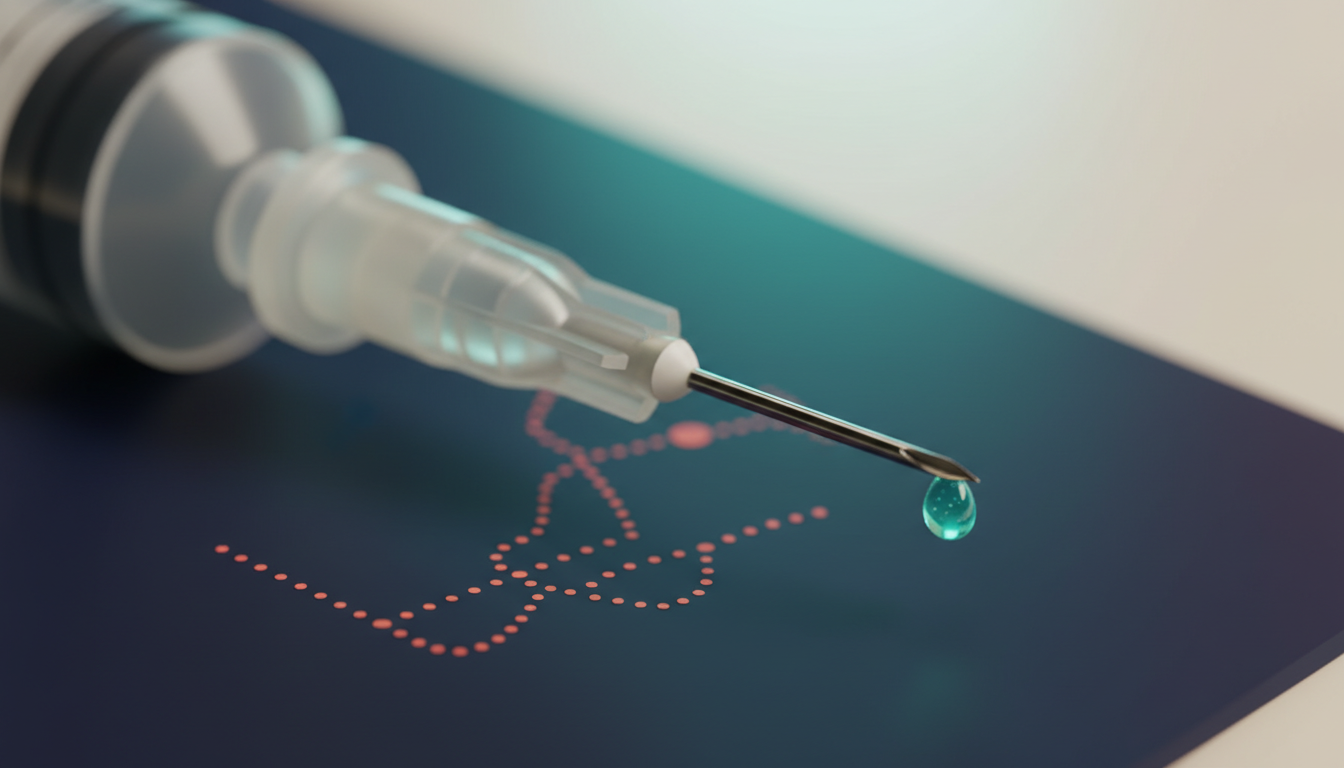
Microneedling — also called collagen induction therapy — is a dermatological procedure in which a device fitted with fine needles is passed over the skin surface, creating arrays of micro-perforations. These perforations are small enough to be invisible to the naked eye but large enough to trigger a localized wound-healing cascade. The term “dermastamp” refers to a stamp-style variant of the device that is pressed rather than rolled, offering more controlled depth per application.
The procedure has been studied in dermatology settings for acne scarring, skin texture, and as a vehicle for enhancing topical compound delivery.
How it works
The micro-channels created by the needles breach the stratum corneum — the primary barrier to topical absorption. In the hours immediately after needling, applied compounds can penetrate to deeper epidermal and shallow dermal layers through these channels before they close, typically within 24 hours. At clinical needle depths (0.5–2.5 mm), the treatment also reaches the papillary and reticular dermis, stimulating fibroblast activity and triggering growth factor release as part of the wound-healing response.
At shallow depths (0.1–0.3 mm), typical of consumer-grade rollers, the needle reaches only the epidermis or just the superficial dermis. The dermal response and depth of compound penetration are substantially less than at clinical depths.
Who asks about it
People researching this topic are often combining microneedling with a topical peptide protocol and want to understand the rationale — or have read conflicting information about whether at-home devices produce clinical effects. The device depth question is central. A 0.25 mm home roller and a 1.5 mm clinical dermastamp are not functionally equivalent tools.
What the research says
A 2008 study in the Journal of the American Academy of Dermatology (Fernandes and Signorini) documented dermal collagen induction following clinical microneedling and noted fibroblast activation patterns consistent with a controlled wound-healing response. More recent studies have examined microneedling as a vehicle for topical delivery: a 2013 study in the Journal of Drugs in Dermatology found significantly increased skin penetration of hyaluronic acid following microneedling versus topical-only application, suggesting that micro-channels meaningfully improve transdermal flux for larger hydrophilic molecules. Whether this extends to peptide compounds depends on the specific molecule and the depth achieved.
What to know before considering it
Clinical microneedling should be performed by a licensed provider with appropriate training. At-home devices at shallow depths carry lower procedural risk but also deliver a more limited stimulus. Any peptide compound applied during or after needling remains subject to the same prescribing requirements as any other route — topical does not mean unregulated when the compound involved is prescription-only. Contraindications to microneedling include active infection, certain inflammatory skin conditions, and blood-thinning medications; a clinician evaluation is required before use.
The Halftime POV
Microneedling is one of the more evidence-supported physical modalities in clinical dermatology. The delivery-enhancement rationale for combining it with topical compounds is mechanistically sound, though the specific combination data for most peptides is thin. The device-depth distinction is not a minor detail — it’s the difference between a cosmetic accessory and a clinical tool. Know which one you’re working with.
Related reading:
FAQ
Q: What does microneedling do to skin? A: Microneedling creates controlled micro-injuries in the skin using fine needles, triggering a wound-healing response that includes collagen and elastin production. Dermatology literature documents improvements in scar appearance, skin texture, and firmness following clinical microneedling. Device depth and needle density are the primary variables.
Q: What is the difference between clinical and at-home microneedle devices? A: Clinical devices (dermapens, dermastamps used by clinicians) use needle depths of 0.5–2.5mm and are single-use or sterilized between patients. At-home dermarollers typically have shorter needles (0.2–0.5mm) with lower penetration depth and less consistent channel formation. The published efficacy data is primarily from clinical-depth devices.
Q: Can microneedling improve peptide penetration? A: Published research describes microneedling-created microchannels as temporary penetration pathways that can increase transdermal delivery of topical compounds applied immediately after treatment. However, the window is short (under an hour), and peptide molecular weight and formulation still affect how much is absorbed. This is an active area of dermatology research with limited large-scale trial data.
Disclaimer
This article is educational and is not medical advice. Compounded medications are not FDA-approved. Clinical outcomes depend on individual factors and require physician evaluation. Results vary. Halftime Health is launching soon — join the waitlist to get updates.
Get updates
Halftime Health is launching soon. We’ll share what we learn along the way — the research, the regulations, the real-world trade-offs. Join the waitlist and we’ll email you when we’re live.
Sources
- Fernandes D, Signorini M. “Combating photoaging with percutaneous collagen induction.” Clinics in Dermatology, 2008
- Aust MC, et al. “Percutaneous collagen induction therapy.” Aesthetic Plastic Surgery, 2011
- Kim JY, et al. “Microneedling for drug delivery.” Journal of Drugs in Dermatology, 2013
Sources & references
- pubmed.ncbi.nlm.nih.gov — https://pubmed.ncbi.nlm.nih.gov/18640513/
- pubmed.ncbi.nlm.nih.gov — https://pubmed.ncbi.nlm.nih.gov/20574773/
- pubmed.ncbi.nlm.nih.gov — https://pubmed.ncbi.nlm.nih.gov/23377515/