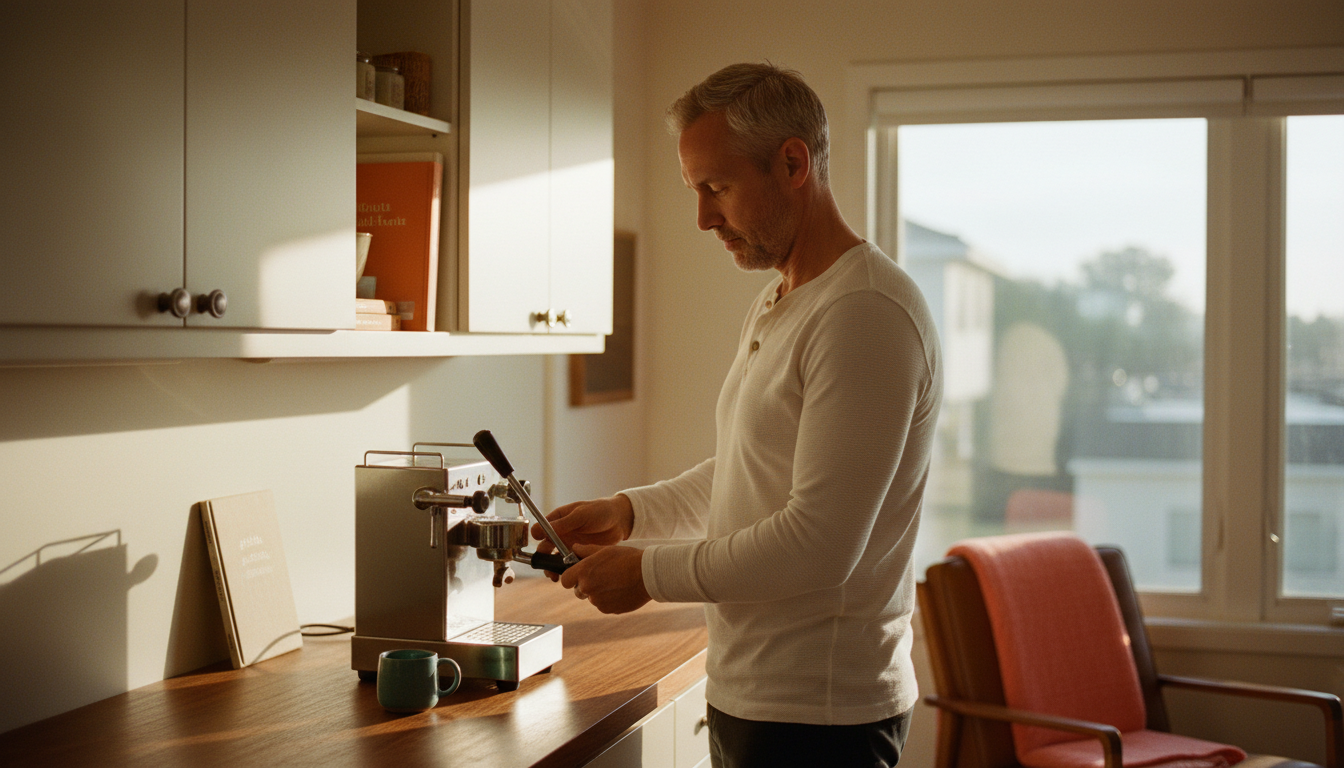
Fatigue in men over 40: a hormonal and metabolic map
Tired is rarely one thing. Here is the map a careful clinician walks through.
TL;DR
- Persistent fatigue in midlife men is rarely a single cause — it is a stack.
- Sleep, blood sugar, thyroid, testosterone, iron, B12, and mood all sit on the same map and pull on each other.
- A panel and a conversation come before any prescription. The workup is the answer.
What it is
This is not the fatigue of one bad night. It is the fatigue that does not lift after a good weekend, that pulls on attention by mid-afternoon, that makes ordinary effort feel heavier than it should. Calling it a single condition is the mistake. It is usually a stack of small problems that compound — and the right move is to investigate the stack.
How it works
Think of energy as a five-room house. Each room has a switch. Sleep is one switch. Blood sugar is another. Thyroid is another. Testosterone is another. Mood is another. If two switches are dim, the whole house feels dim, and flipping only one of them up does not solve it. A clinician’s job is to walk the rooms and check each switch — not to assume which one is broken.
Who asks about it
People come to this topic when energy has dropped without an obvious explanation, when work feels harder than it used to, or when a partner or family member has noticed. The right starting point is curiosity about which rooms are dim, not a search for one heroic intervention.
What the research says
About 1 in 3 U.S. adults sleep fewer than seven hours per night, and short sleep is independently associated with daytime fatigue and worse metabolic markers (CDC, 2024). Subclinical thyroid dysfunction — flagged on a TSH lab — is a common, easily missed driver in this age band (NIH MedlinePlus, 2024). Low testosterone, low ferritin, and elevated fasting insulin all show up in midlife fatigue workups. The pattern matters more than any single number.
What to know before considering it
Skipping the workup is the most common mistake. Replacing testosterone in a man whose testosterone is normal will not solve fatigue and may carry its own risks. Peptides aimed at the growth hormone axis are sometimes considered for energy and recovery, but only after the simpler causes have been ruled out and only with a licensed clinician.
The Halftime POV
We trust the workup. The fastest path to feeling better at 45 is rarely a single supplement or shot — it is a panel, a conversation, and a clinician who walks the rooms with you. Fix sleep. Fix blood sugar. Then look at hormones. Order matters.
Related reading:
- Testosterone panels for men: total, free, and SHBG together
- A1C and fasting glucose: the two metabolic baselines
- Peptides for men in midlife: a framework for starting smart
FAQ
Q: Why am I so tired in my 40s as a man? A: Fatigue at this stage is usually multi-factorial. Sleep quality, blood-sugar control, thyroid function, testosterone, iron, B12, mood, and exercise volume all interact. A clinician will work through them in order.
Q: What labs help investigate fatigue in midlife men? A: A reasonable starting panel includes CBC, ferritin, B12, TSH and free T4, fasting glucose and A1C, fasting insulin, total and free testosterone, SHBG, and vitamin D. Additional panels follow the pattern of results.
Q: Will testosterone replacement fix fatigue? A: It depends on whether testosterone is the actual driver. Replacing testosterone in men whose levels are normal is not appropriate. A workup matters more than the prescription.
Disclaimer
This article is educational and is not medical advice. Compounded medications are not FDA-approved. Clinical outcomes depend on individual factors and require physician evaluation. Results vary. Halftime Health is launching soon — join the waitlist to get updates.
Get updates
Halftime Health is launching soon. We’ll share what we learn along the way — the research, the regulations, the real-world trade-offs. Join the waitlist and we’ll email you when we’re live.
Sources
- CDC. Adults — Sleep Facts and Stats. (CDC, 2024)
- NIH MedlinePlus. Thyroid-Stimulating Hormone (TSH) Test. (MedlinePlus, 2024)
Sources & references
- cdc.gov — https://www.cdc.gov/sleep/data-research/facts-stats/adults-sleep-facts-and-stats.html
- medlineplus.gov — https://medlineplus.gov/lab-tests/thyroid-stimulating-hormone-tsh-test/