GHK-Cu: the copper peptide and skin biology
A look at the tripeptide that’s drawn sustained attention in dermatology research — and why.
TL;DR
- GHK-Cu is glycyl-L-histidyl-L-lysine bound to copper — a tripeptide found naturally in human plasma that declines with age.
- Laboratory and ex vivo research has linked it to collagen-synthesis gene expression and extracellular matrix remodeling.
- Most data comes from cell culture and animal models; controlled human trials are limited — important context before drawing conclusions.
What it is
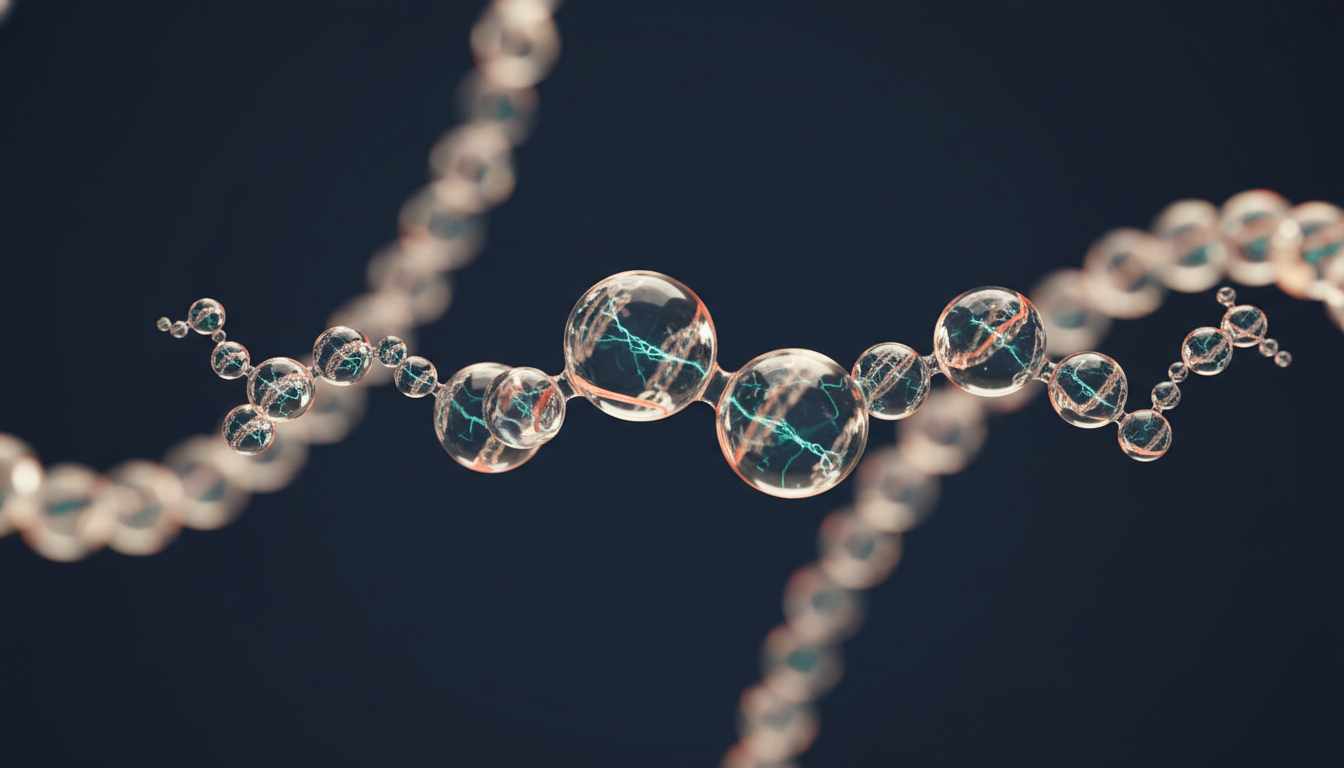
GHK-Cu stands for glycyl-L-histidyl-L-lysine copper. It is a naturally occurring tripeptide — a chain of just three amino acids (glycine, histidine, lysine) bound to a copper ion. Human plasma concentrations sit around 200 ng/mL at age 20 and fall to roughly 80 ng/mL by age 60, according to work by Loren Pickart, who first isolated and characterized the molecule in the 1970s. That age-related decline made GHK-Cu a subject of sustained interest in dermatology and wound-healing research.
How it works
GHK-Cu is understood to interact with a range of cellular pathways involved in tissue repair. The copper ion is central: it acts as a cofactor for enzymes including lysyl oxidase, which cross-links collagen and elastin fibers in the extracellular matrix (ECM). The peptide portion appears to facilitate copper uptake into cells and modulate gene expression related to matrix remodeling.
The histidine residue is particularly important for copper chelation — it binds the Cu²⁺ ion and stabilizes the complex, preventing free copper from generating oxidative byproducts.
Who asks about it
People researching GHK-Cu are usually looking at two overlapping questions: does the age-related decline in plasma GHK-Cu have practical relevance for skin maintenance, and is there a meaningful difference between topical cosmetic serums and compounded injectable formulations? These are reasonable questions, and the answer depends heavily on route of delivery — a topic covered separately.
What the research says
Pickart’s 2018 review in Biogerontology summarized decades of research on GHK-Cu across wound healing, ECM remodeling, and gene-expression studies. In ex vivo skin models and cell culture, GHK-Cu has been associated with upregulation of genes encoding type I and type III collagen, as well as modulation of matrix metalloproteinases (MMPs) — enzymes involved in ECM breakdown and remodeling. Animal wound-healing studies show accelerated tissue repair in treated groups relative to controls. The key caveat, stated clearly in Pickart’s own work, is that the majority of evidence is preclinical. Rigorous, randomized controlled trials in humans remain limited. The research is promising enough to warrant continued investigation; it is not sufficient to draw firm conclusions about efficacy in a clinical setting.
What to know before considering it
GHK-Cu compounded for injection is a prescription-only compound requiring a clinician evaluation. Topical and injectable forms deliver the peptide via fundamentally different mechanisms with different pharmacokinetics — route matters. As with any compounded preparation, individual response varies. Side effects reported in the literature are generally mild (injection-site reactions), but any compounded peptide protocol requires physician supervision. GHK-Cu is generally well-tolerated in physician-supervised protocols; individual response varies.
The Halftime POV
GHK-Cu is one of the more rigorously characterized skin-related peptides in the published literature. The gap between what ex vivo science shows and what’s confirmed in controlled human trials is real, and we think it’s worth naming directly. At Halftime, we’d rather you understand exactly what the research says — and what it doesn’t — than oversell what a compound can do. When you work with our clinical team, that distinction is the first conversation.
Related reading:
FAQ
Q: What is GHK-Cu? A: GHK-Cu (glycyl-L-histidyl-L-lysine copper) is a naturally occurring copper-binding tripeptide found in human plasma, saliva, and urine. It declines with age. Published research has studied it in the context of dermal collagen synthesis, wound healing, and skin remodeling in cell culture and animal models.
Q: How does GHK-Cu work in skin? A: GHK-Cu is studied for its interactions with matrix metalloproteinases (MMPs) and collagen gene expression in dermal fibroblasts. Published cell-culture research describes upregulation of collagen I and III genes and modulation of MMP activity. Most data is in vitro or from ex vivo skin models, not large-scale human trials.
Q: Is GHK-Cu available through a compounding pharmacy? A: GHK-Cu is a day-1 compound available through licensed 503A compounding pharmacies with a valid prescription for injectable formulations. Topical GHK-Cu serums are sold as cosmetics without a prescription — these are different products with different regulatory status and different penetration pharmacokinetics.
Disclaimer
This article is educational and is not medical advice. Compounded medications are not FDA-approved. Clinical outcomes depend on individual factors and require physician evaluation. Results vary. Halftime Health is launching soon — join the waitlist to get updates.
Get updates
Halftime Health is launching soon. We’ll share what we learn along the way — the research, the regulations, the real-world trade-offs. Join the waitlist and we’ll email you when we’re live.
Sources
- Pickart L, Margolina A. “Regenerative and Protective Actions of the GHK-Cu Peptide in the Light of the New Gene Data.” International Journal of Molecular Sciences, 2018
- Pickart L. “The human tri-peptide GHK and tissue remodeling.” Journal of Biomaterials Science, 2008
Sources & references
- pubmed.ncbi.nlm.nih.gov — https://pubmed.ncbi.nlm.nih.gov/30150645/
- pubmed.ncbi.nlm.nih.gov — https://pubmed.ncbi.nlm.nih.gov/18158888/