GHK-Cu vs retinol: how copper peptides and vitamin A compare
Two of the most-researched skincare ingredients work through different pathways — and that difference is the most useful part of the comparison.
TL;DR
- GHK-Cu is a copper-binding peptide that supports collagen production and skin repair signaling.
- Retinol (a form of vitamin A) speeds skin cell turnover and influences collagen through a different pathway.
- Both have research behind them. They are not interchangeable, and many routines use both.
What they are
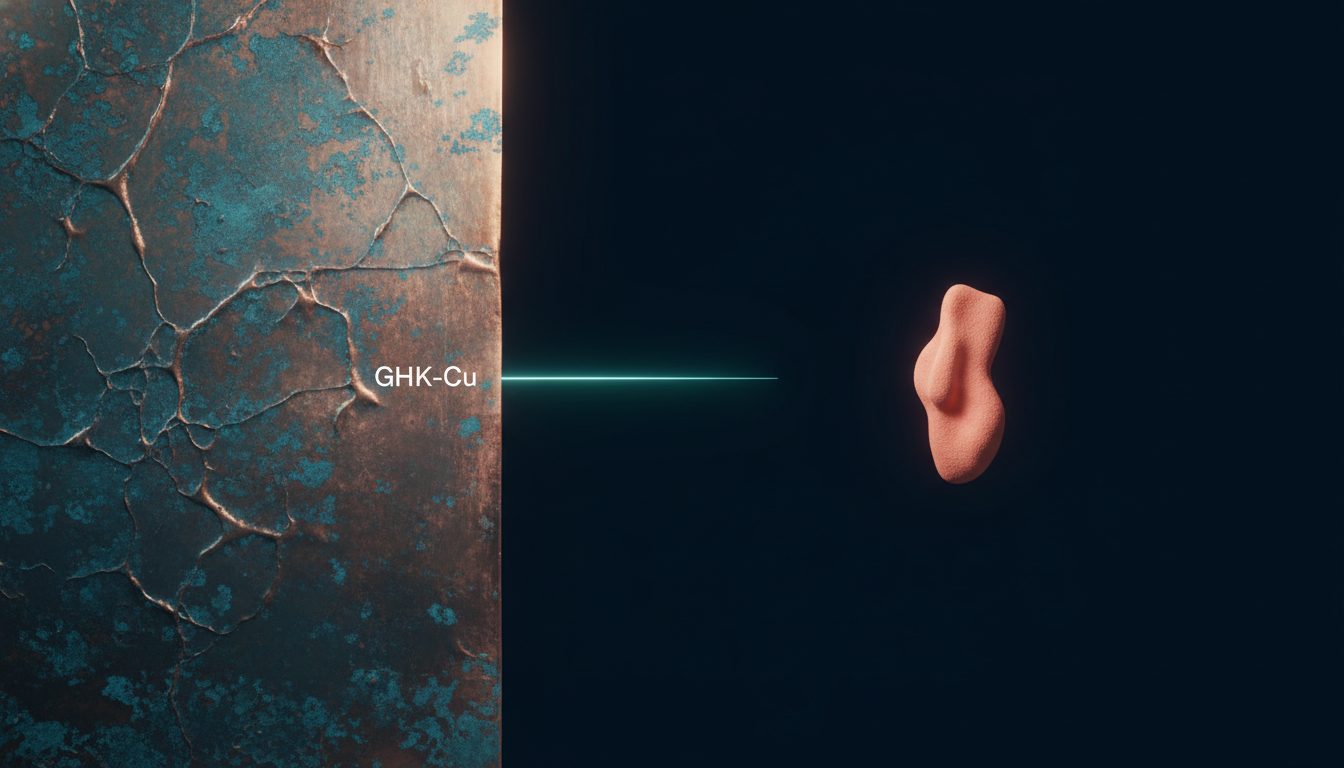
GHK-Cu is a three-amino-acid peptide bound to a copper ion. It is naturally present in human plasma and was first described in skin research in the 1970s (Pickart et al., BioMed Research International, 2012).
Retinol is a form of vitamin A. The body converts retinol into retinoic acid, which binds receptors inside skin cells. Stronger versions, like tretinoin, are prescription drugs. Decades of dermatology research have tracked retinoid effects on skin texture, fine lines, and pigmentation (Mukherjee et al., Clinical Interventions in Aging, 2006).
How they work
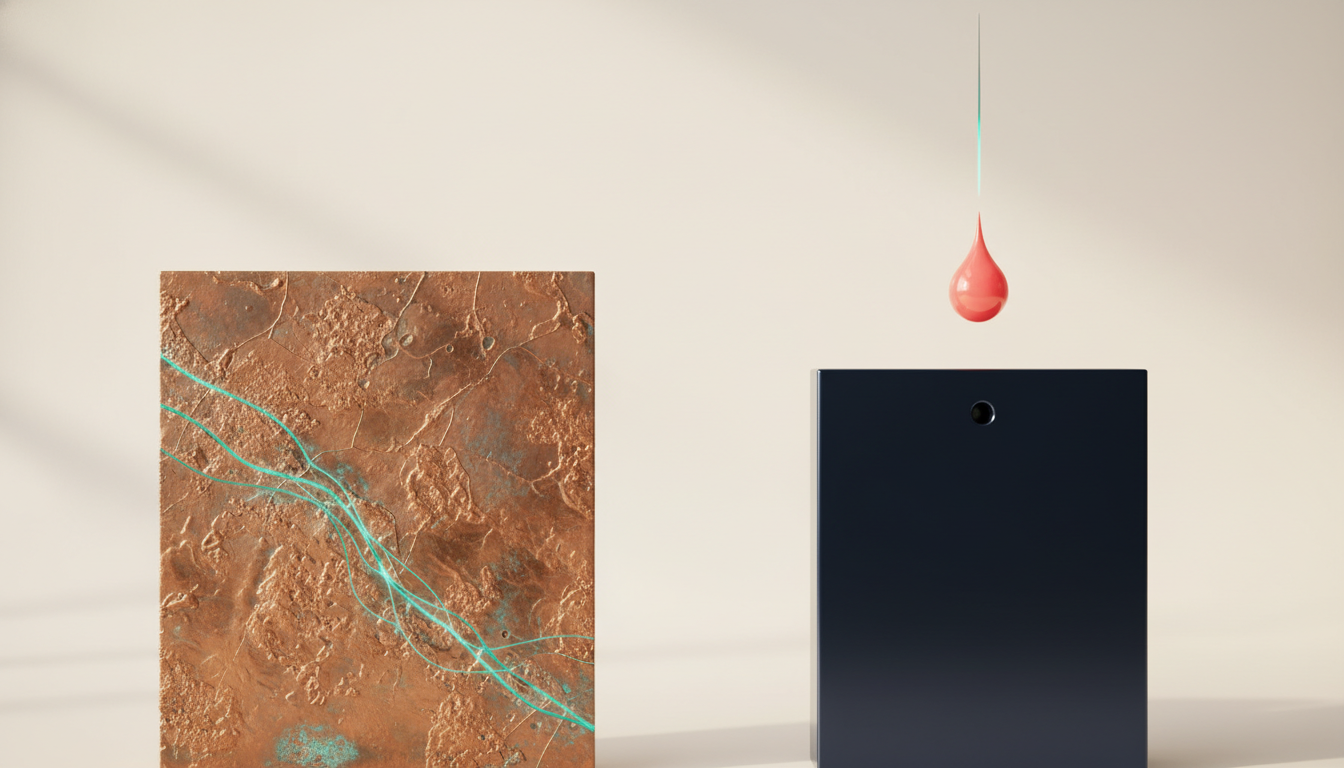
A simple analogy: skin maintenance is a renovation project with two crews. One crew lays new structure (collagen and elastin). The other crew cleans up and turns over old material. Both matter.
GHK-Cu sits on the structure side. Cell studies link it to higher collagen and elastin production and to repair signaling. Retinol sits on the turnover side. Once converted to retinoic acid, it pushes skin cells through their cycle faster and changes the way they make pigment and structural proteins.
The two pathways are different. That is why dermatologists often think of them as complements rather than substitutes.
Who asks about it
People usually ask this question when they are building a routine and trying to choose between ingredients. The honest answer is that the choice is rarely either/or in clinical practice.
What the research says
Retinol and prescription retinoids have the larger and longer evidence base. Multiple controlled studies have shown improvements in fine lines, texture, and pigmentation (Mukherjee et al., 2006). GHK-Cu has a smaller but consistent base — most studies are small, but the signal across them points the same way (Pickart et al., 2012). About 6 in 10 dermatology trials of topical peptides report some measurable benefit; the size of effect varies a lot by formulation.
What to know before considering it
Retinoids can cause irritation, especially at the start. GHK-Cu in topical form is generally well-tolerated. Combining them on the same night can amplify irritation. A clinician or dermatologist can help build a routine that uses both without driving the skin into reactivity.
The Halftime POV
The most useful framing is that GHK-Cu and retinol are not in the same lane. One supports the build. The other supports the turnover. The research backs both as worth considering, with retinoids having the deeper bench. A good plan often uses both on different nights and lets the skin tell you what it can take.
Related reading:
- GHK-Cu: the copper peptide and skin biology
- How GHK-Cu promotes collagen synthesis: the mechanism
- GHK-Cu topical vs injection: different delivery different data
FAQ
Q: Is GHK-Cu better than retinol? A: Neither is universally better. They act through different pathways. Retinol has more decades of large clinical research behind it. GHK-Cu has a different mechanism and a smaller but consistent research base. Many dermatologists use both.
Q: Can you use GHK-Cu and retinol together? A: Some clinicians layer them on alternate nights to limit irritation. Others combine them in a single routine. The right combination depends on skin type and tolerance and should be discussed with a clinician or dermatologist.
Q: Are GHK-Cu and retinol both FDA-approved? A: Retinoids in prescription form (like tretinoin) are FDA-approved drugs. Cosmetic retinol is regulated as a cosmetic ingredient. GHK-Cu is not FDA-approved as a drug.
Disclaimer
This article is educational and is not medical advice. Compounded medications are not FDA-approved. Clinical outcomes depend on individual factors and require physician evaluation. Results vary. Halftime Health is launching soon — join the waitlist to get updates.
Get updates
Halftime Health is launching soon. We’ll share what we learn along the way — the research, the regulations, the real-world trade-offs. Join the waitlist and we’ll email you when we’re live.
Sources
- Pickart L, Vasquez-Soltero JM, Margolina A. GHK peptide as a natural modulator of multiple cellular pathways in skin regeneration. BioMed Research International, 2012.
- Mukherjee S, et al. Retinoids in the treatment of skin aging: an overview of clinical efficacy and safety. Clinical Interventions in Aging, 2006.
Sources & references
- pubmed.ncbi.nlm.nih.gov — https://pubmed.ncbi.nlm.nih.gov/22690674/
- pubmed.ncbi.nlm.nih.gov — https://pubmed.ncbi.nlm.nih.gov/17515510/