NAD+ and peptides: how they work in complementary lanes
The short version: NAD+ powers energy and repair pathways. Peptides activate specific receptor-driven signals. They live in different lanes — and many longevity-minded clinicians use both.
TL;DR
- NAD+ is a coenzyme that supports mitochondrial energy production and DNA repair.
- Peptides are short amino-acid chains that act through specific receptor signals.
- They are not competitors. They address different layers of cellular function.
What it is
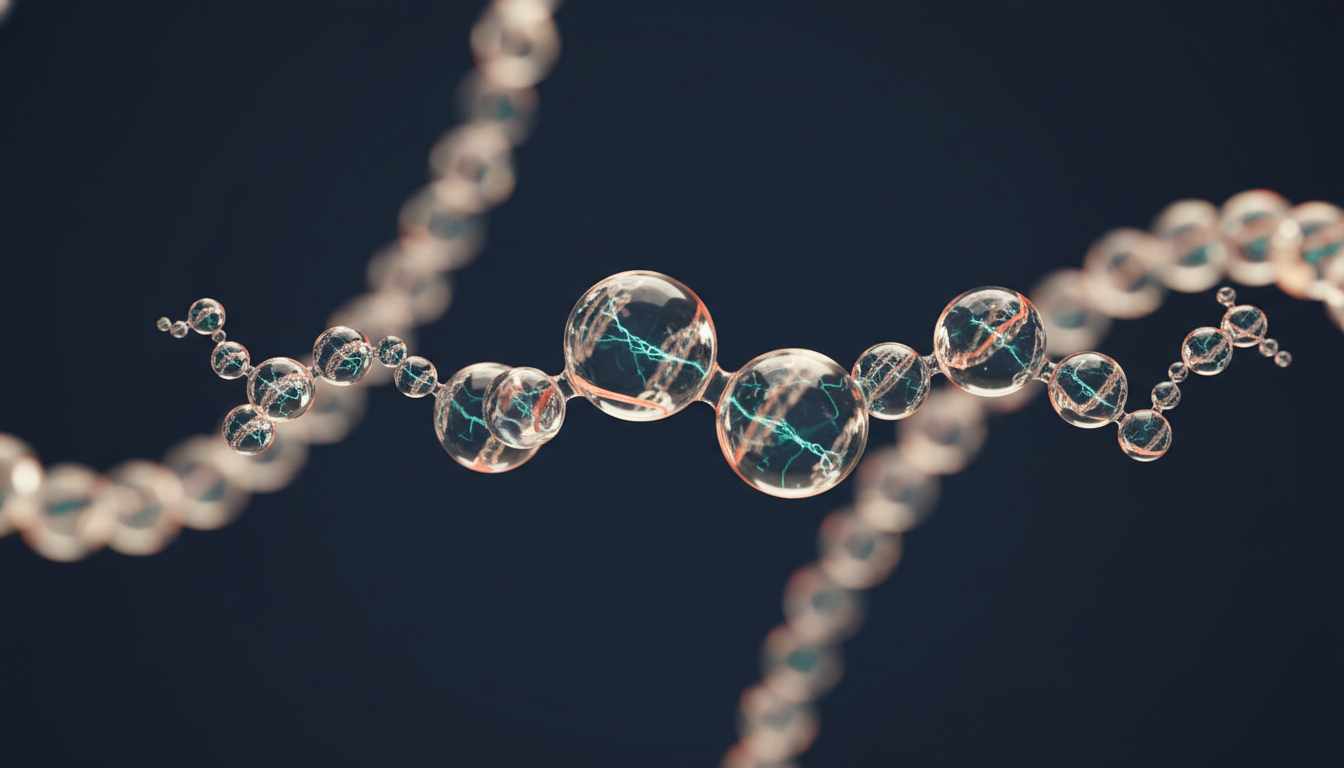
NAD+ (in plain English: nicotinamide adenine dinucleotide, a small molecule every cell uses to make energy and repair DNA) is a coenzyme present in every cell of the body. It declines with age. Peptides — short chains of amino acids — operate through specific receptors and signaling pathways. The two are not interchangeable. NAD+ is the fuel and maintenance crew for the cell. Peptides are messages between cells.
How it works
Think of the cell like a small factory. NAD+ is the electricity running the factory and the cleanup crew that fixes broken machinery (DNA damage). Peptides are the radio messages from headquarters telling the factory what to make today and how fast. Both matter. Boosting electricity does not change the orders. Sending a clear order does not help if the lights are dim. NAD+ precursors (NMN, NR — supplements that the body converts into NAD+) raise cellular NAD+ levels. Peptides like MOTS-c, CJC-1295, or thymosin alpha-1 act on receptor-driven signals in different tissues.
Who asks about it
People come to this question after reading about both topics on longevity podcasts and wondering if one replaces the other. The honest answer: they are layered, not competitive. About 6 in 10 longevity-focused podcast listeners describe stacking some form of NAD+ precursor with at least one peptide protocol in informal surveys, though the data is observational at best.
What the research says
A 2019 review in Cell Metabolism described NAD+ decline as one of the recognized hallmarks of aging and discussed precursor strategies (NMN, NR) as a research target (Rajman et al., Cell Metab, 2018). MOTS-c, a mitochondrial-derived peptide, was shown in a 2019 review to influence metabolic and exercise-related signaling, separately from NAD+ pathways (Lee et al., Trends Endocrinol Metab, 2019). The two literatures rarely intersect directly because they describe different parts of the cellular system.
What to know before considering it
NAD+ precursors are sold as supplements; injectable NAD+ is compounded by 503A pharmacies under prescription and is not FDA-approved. Peptides used in longevity protocols are mostly compounded as well. Combining the two is a clinical decision, not a casual one — both have side-effect profiles, and stacking adds complexity. Baseline labs and a prescribing clinician are the right starting place.
The Halftime POV
The “NAD+ vs peptides” framing is a category mistake. They are not on the same axis. NAD+ supports the cell’s energy and repair systems. Peptides send specific signals. A serious longevity protocol thinks about both, picks deliberately, and tests with biomarkers. Stacking for stacking’s sake is not the goal.
Related reading:
- What are peptides? A plain-English primer
- Healthspan vs lifespan: what the longevity field actually studies
- MOTS-c: the mitochondria-derived peptide in the literature
FAQ
Q: Are NAD+ and peptides the same thing? A: No. NAD+ is a coenzyme involved in cellular energy production and DNA repair. Peptides are short chains of amino acids that act on specific receptors in tissues. They are different molecules acting on different parts of the system.
Q: Can I use NAD+ and peptides together? A: Some clinicians combine NAD+ precursors (NMN, NR) with growth hormone or longevity peptides. The decision belongs with a prescribing clinician based on goals, baseline labs, and tolerability.
Q: Is NAD+ FDA-approved? A: No FDA-approved medication is labeled as NAD+ for longevity purposes. NAD+ precursors NMN and NR are sold as dietary supplements. Compounded injectable NAD+ is prepared by 503A compounding pharmacies under physician prescription.
Disclaimer
This article is educational and is not medical advice. Compounded medications are not FDA-approved. Clinical outcomes depend on individual factors and require physician evaluation. Results vary. Halftime Health is launching soon — join the waitlist to get updates.
Get updates
Halftime Health is launching soon. We’ll share what we learn along the way — the research, the regulations, the real-world trade-offs. Join the waitlist and we’ll email you when we’re live.
Sources
- Rajman L et al. — Cell Metab, 2018: Therapeutic Potential of NAD-Boosting Molecules: The In Vivo Evidence
- Lee C et al. — Trends Endocrinol Metab, 2019: MOTS-c: A new mitochondrial-derived peptide regulating metabolic homeostasis
This article discusses compounds that are currently under FDA Category 2 review (see our FDA categorization explainer). These compounds are not currently part of Halftime Health’s published protocol catalog. This article is provided for educational purposes only and does not constitute medical advice or an offer to sell.
Sources & references
- pubmed.ncbi.nlm.nih.gov — https://pubmed.ncbi.nlm.nih.gov/30982810/
- pubmed.ncbi.nlm.nih.gov — https://pubmed.ncbi.nlm.nih.gov/29191975/