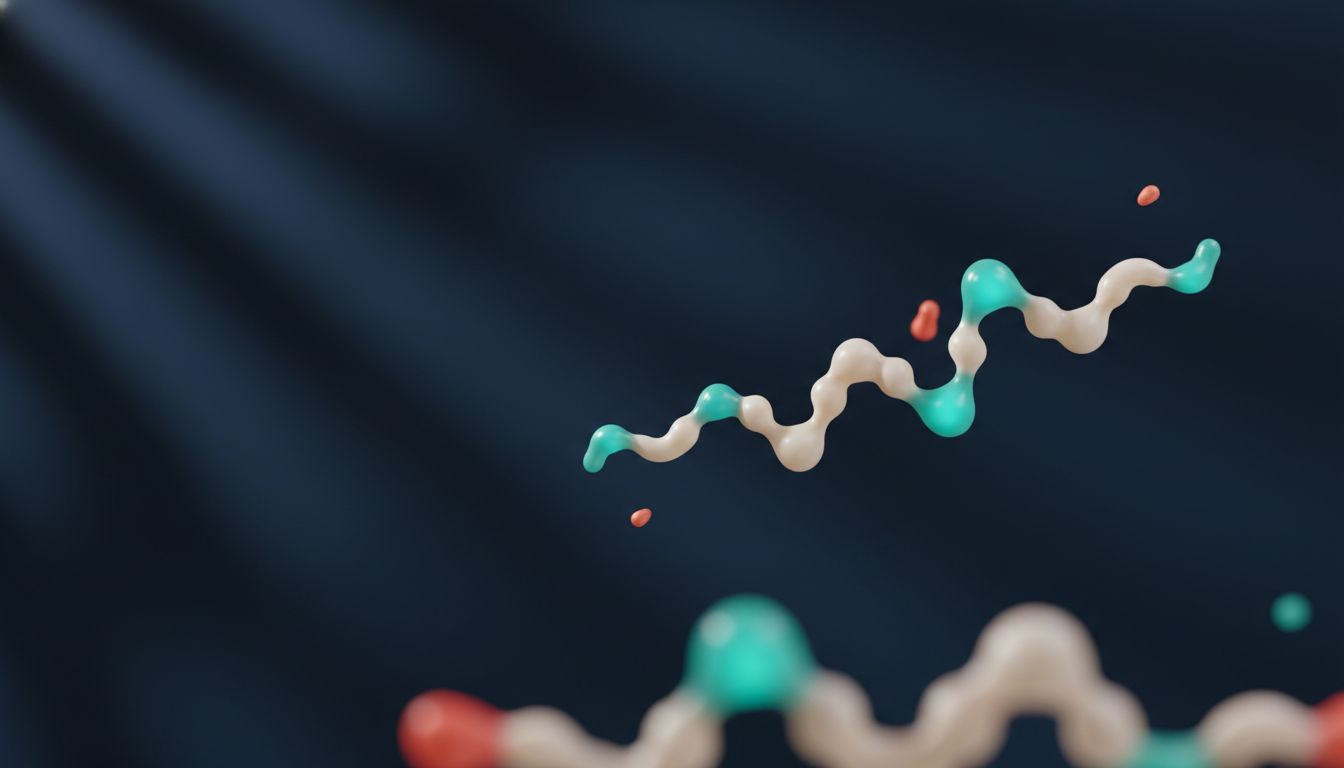
Oxytocin beyond the stereotype: a peptide primer
“Love hormone” is the shorthand. The actual neuroscience is both more specific and more nuanced.
TL;DR
- Oxytocin is a nine-amino-acid peptide (nonapeptide) produced in the hypothalamus and released from the posterior pituitary gland.
- Published research has studied it in the context of social bonding, trust, orgasm physiology, and stress modulation — its role is broader than any single-label captures.
- The intranasal route is the most studied non-injection delivery method in research settings; whether it achieves meaningful central nervous system concentrations is a live scientific debate.
What it is
Oxytocin is a nonapeptide — nine amino acids — synthesized in the paraventricular and supraoptic nuclei of the hypothalamus. It is transported to the posterior pituitary gland, where it is stored and released into peripheral circulation in response to relevant stimuli: physical touch, nipple stimulation during nursing, social bonding, and sexual activity including orgasm. It also acts as a neurotransmitter within the brain through axonal projections from hypothalamic nuclei to regions including the amygdala, hippocampus, and brainstem.
The “love hormone” label comes from early research on pair bonding in voles and human studies on trust behavior. The label is not wrong, exactly — oxytocin is involved in those phenomena — but it substantially understates the compound’s role in physiology.
How it works
Oxytocin acts on G protein-coupled oxytocin receptors (OTRs) distributed across the brain and peripheral tissues. In social contexts, OTR activation in limbic regions (amygdala, nucleus accumbens) appears to modulate approach behavior, reduce fear responses, and facilitate pro-social processing. In reproductive physiology, oxytocin drives uterine contractions during labor and milk let-down during nursing. In sexual physiology, plasma oxytocin rises significantly during and after orgasm in both men and women — a finding documented in multiple studies from the 1980s through the 2010s.
The intranasal route has been used in the majority of human research because it is non-invasive and reaches the brain more readily than peripheral injection (which does not efficiently cross the blood-brain barrier). Whether intranasal oxytocin achieves pharmacologically relevant concentrations in the CNS remains debated: a 2016 review in Psychoneuroendocrinology found mixed evidence for central uptake and noted that many behavioral studies used doses far above physiological levels.
Who asks about it
People researching oxytocin usually have one of two starting points: interest in the social and intimacy applications described in popular science writing, or a clinical context (postpartum, sexual dysfunction) where a provider has mentioned it. The gap between the popular representation — confident, simple, effect-confirmed — and the actual research literature is substantial. The research is interesting; the outcomes are more context-dependent than the headlines suggest.
What the research says
A 2013 meta-analysis by Bakermans-Kranenburg and van IJzendoorn in Psychoneuroendocrinology analyzed 72 studies of intranasal oxytocin in human subjects and found meaningful heterogeneity in outcomes: social facilitation effects were present in some contexts and absent in others, with moderating variables including baseline attachment style, sex, and dose. The authors concluded that oxytocin’s effects are contingent rather than universal.
In the context of sexual function specifically, small controlled studies have examined intranasal oxytocin for orgasm-associated difficulties and reported mixed results. A 2013 study in Hormones and Behavior found subjective improvements in sexual experience in a small double-blind crossover trial; the sample size was insufficient to draw strong conclusions.
What to know before considering it
Compounded oxytocin — whether as a nasal spray or injection — is a prescription compound requiring clinician evaluation. It is not an over-the-counter supplement. Oxytocin has known peripheral effects including effects on blood pressure and uterine activity; these are relevant clinical considerations. Because oxytocin also exists in commercially manufactured pharmaceutical-grade formulations (primarily for obstetric use), compounded versions should be distinguished from those approved products. Any compounded oxytocin is not itself FDA-approved. Individual response varies, and the evidence base for sexual and social applications remains in active development.
The Halftime POV
Oxytocin is a genuinely interesting compound with a research profile that doesn’t fit neatly into either “this works” or “this is hype.” The neuroscience is rich; the human trial data is more equivocal than the popular press implies. We think that nuance is useful. If oxytocin is relevant to your picture, the starting point is understanding what the evidence actually shows — not what the label says — and having that conversation with a clinician who has read the same literature.
Related reading:
FAQ
Q: What is oxytocin? A: Oxytocin is a 9-amino-acid neuropeptide produced in the hypothalamus and released by the posterior pituitary. It is involved in social bonding, trust, uterine contractions during childbirth, and breastfeeding. Its role in human social behavior has been studied through intranasal administration research since the early 2000s.
Q: Does intranasal oxytocin actually reach the brain? A: The question of whether intranasally administered oxytocin crosses the blood-brain barrier in sufficient quantities to produce central effects is actively debated in the published literature. Some studies report behavioral effects; others document primarily peripheral effects. The mechanistic pathway remains under scientific discussion, and this uncertainty is part of an accurate picture of the research.
Q: Is compounded oxytocin available with a prescription? A: Yes. Oxytocin is a day-1 compound available through licensed 503A compounding pharmacies with a valid prescription. It requires a clinician evaluation. Compounded oxytocin is not an FDA-approved product. Administration routes in research include intranasal, sublingual, and injectable — the clinician determines the appropriate route based on the protocol.
Disclaimer
This article is educational and is not medical advice. Compounded medications are not FDA-approved. Clinical outcomes depend on individual factors and require physician evaluation. Results vary. Halftime Health is launching soon — join the waitlist to get updates.
Get updates
Halftime Health is launching soon. We’ll share what we learn along the way — the research, the regulations, the real-world trade-offs. Join the waitlist and we’ll email you when we’re live.
Sources
- Bakermans-Kranenburg MJ, van IJzendoorn MH. “Sniffing around oxytocin: review and meta-analyses of trials in healthy and clinical groups.” Psychoneuroendocrinology, 2013
- Kosfeld M, et al. “Oxytocin increases trust in humans.” Nature, 2005
- Carmichael MS, et al. “Plasma oxytocin increases in the human sexual response.” Journal of Clinical Endocrinology & Metabolism, 1987
- Burri A, et al. “Intranasal oxytocin improves sexual desire and function in women.” Hormones and Behavior, 2013
Sources & references
- pubmed.ncbi.nlm.nih.gov — https://pubmed.ncbi.nlm.nih.gov/23369686/
- pubmed.ncbi.nlm.nih.gov — https://pubmed.ncbi.nlm.nih.gov/15931222/
- pubmed.ncbi.nlm.nih.gov — https://pubmed.ncbi.nlm.nih.gov/3558716/
- pubmed.ncbi.nlm.nih.gov — https://pubmed.ncbi.nlm.nih.gov/24361357/