Peptide half-life basics: why dosing schedules vary
Dosing frequency isn’t arbitrary — it follows the pharmacokinetics of each compound.
TL;DR
- Half-life is the time it takes for the concentration of a compound in the body to fall by 50% — it determines how often a peptide needs to be dosed.
- Short-acting peptides like ipamorelin have half-lives measured in minutes, requiring daily or multiple-daily injections to maintain effect.
- Modified peptides like CJC-1295 with DAC have half-lives of approximately 6 to 8 days, shifting the dosing schedule to once or twice weekly.
What it is
Half-life (t½) is a pharmacokinetic concept: the time required for the plasma concentration of a compound to decrease by half from its peak. It is one of the most fundamental parameters in clinical pharmacology — it tells a clinician how quickly a drug is cleared and therefore how often it needs to be administered to maintain a target concentration.
For most unmodified peptides, half-life is short. The body recognizes peptide bonds and breaks them down via circulating enzymes called peptidases. A peptide injected subcutaneously may reach peak concentration within 15 to 30 minutes and be largely cleared within an hour or two.
How it works
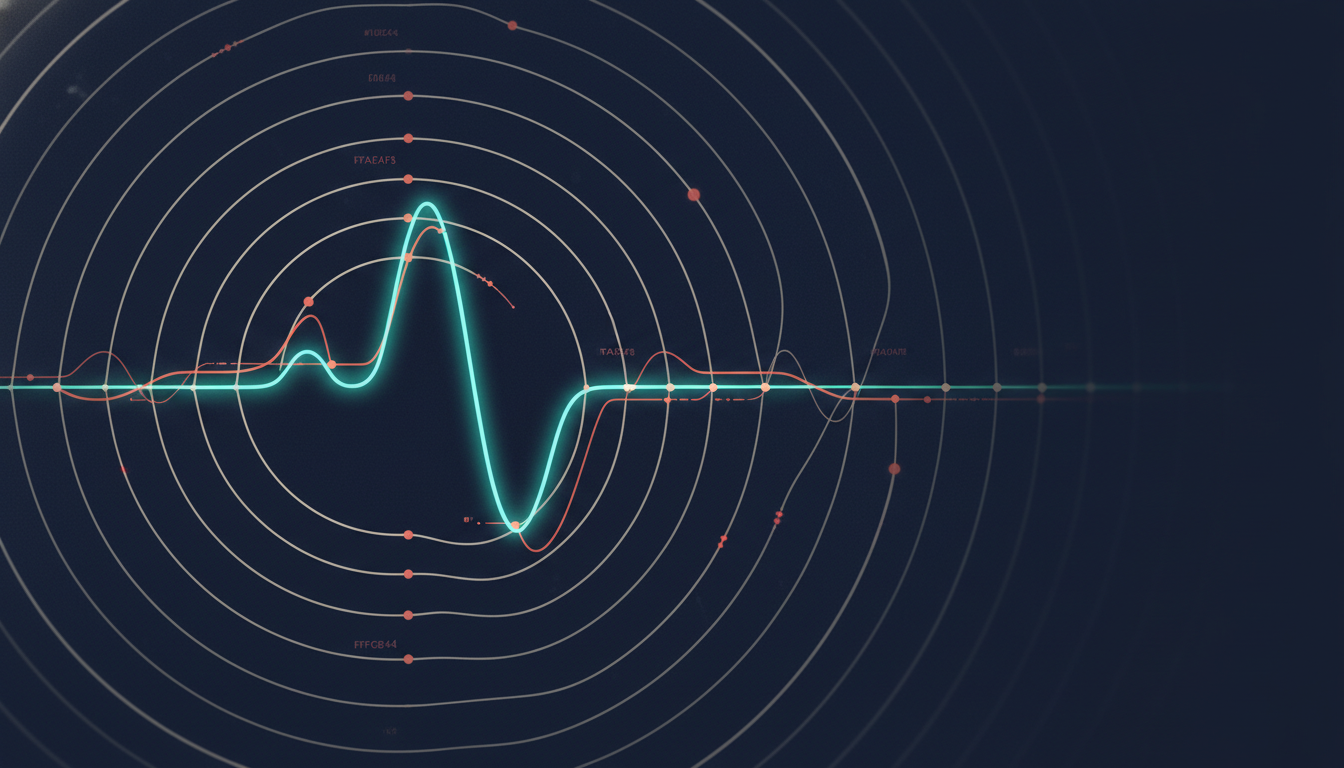
The half-life equation has a direct clinical consequence: a compound with a 30-minute half-life dosed once drops to 12.5% of its peak concentration within 90 minutes. A compound with a 7-day half-life dosed once still maintains roughly 50% of its peak one week later.
CJC-1295 illustrates the contrast well. The base molecule, CJC-1295 without DAC, has a half-life in the range of 30 minutes. Adding a Drug Affinity Complex (DAC) — a technology that allows the molecule to bind to albumin in the bloodstream — extends the half-life to approximately 6 to 8 days, as reported in a pharmacokinetic study in healthy adults (Teichman et al., Journal of Clinical Endocrinology & Metabolism, 2006). That single modification changes the dosing schedule from daily to weekly or biweekly.
Who asks about it
This topic matters to anyone who has looked at a peptide protocol and wondered why ipamorelin is dosed nightly while CJC-1295 with DAC is dosed weekly, or why some protocols call for multiple daily injections. The answer is always half-life and the target concentration curve the clinician is trying to maintain.
What the research says
The Teichman et al. 2006 study in the Journal of Clinical Endocrinology & Metabolism remains the primary pharmacokinetic reference for CJC-1295 with DAC in humans. The study reported sustained GH elevation following a single dose, with a half-life of approximately 6 to 8 days, supporting once or twice weekly dosing intervals.
For ipamorelin specifically, published pharmacokinetic data from animal studies reports half-lives in the range of 2 hours, with human pharmacokinetic data referenced in Raun et al., 1998 (Raun et al., European Journal of Endocrinology, 1998).
What to know before considering it
Half-life determines dosing schedule, but it does not determine appropriateness for an individual. A clinician will consider your baseline labs, health history, and goals when deciding on the timing and frequency of any protocol. Never adjust a dosing schedule without clinician guidance — altering timing based on convenience rather than pharmacokinetics can undermine the protocol’s intended effect.
The Halftime POV
Half-life is one of those concepts that looks like pharmacology-class detail but has very practical consequences for how you actually live with a protocol. A once-weekly injection is a different lifestyle commitment than a nightly one. Understanding the pharmacokinetics helps you have a real conversation with your clinician about protocol design — not just about what to take, but about how it will fit into your actual schedule.
Related reading:
FAQ
Q: What is peptide half-life? A: Half-life (t½) is the time required for the plasma concentration of a compound to decrease by 50% from its peak. It determines how frequently a peptide must be dosed to maintain a therapeutic effect. Most unmodified peptides have short half-lives — minutes to a few hours — because the body’s peptidases break them down rapidly.
Q: Why does CJC-1295 with DAC have a longer half-life than regular CJC-1295? A: Adding a Drug Affinity Complex (DAC) allows the CJC-1295 molecule to bind to albumin in the bloodstream, dramatically slowing clearance. The non-DAC version has a half-life of roughly 30 minutes; the DAC version has a half-life of approximately 6–8 days, as documented by Teichman et al. in the Journal of Clinical Endocrinology & Metabolism, 2006.
Q: Does a longer peptide half-life mean a better protocol? A: Not necessarily. A longer half-life changes the dosing schedule and the concentration curve over time, but appropriateness depends on the goal. Pulsatile GH secretion — which mimics natural physiology — may be better served by short-acting peptides dosed at specific times. The right half-life profile is determined by a clinician based on your labs and goals.
Disclaimer
This article is educational and is not medical advice. Compounded medications are not FDA-approved. Clinical outcomes depend on individual factors and require physician evaluation. Results vary. Halftime Health is launching soon — join the waitlist to get updates.
Get updates
Halftime Health is launching soon. We’ll share what we learn along the way — the research, the regulations, the real-world trade-offs. Join the waitlist and we’ll email you when we’re live.
Sources
- Teichman SL, et al. Prolonged stimulation of growth hormone (GH) and insulin-like growth factor I secretion by CJC-1295, a long-acting analog of GH-releasing hormone, in healthy adults. Journal of Clinical Endocrinology & Metabolism, 2006.
- Raun K, et al. Ipamorelin, the first selective growth hormone secretagogue. European Journal of Endocrinology, 1998.
This article discusses compounds that are currently under FDA Category 2 review (see our FDA categorization explainer). These compounds are not currently part of Halftime Health’s published protocol catalog. This article is provided for educational purposes only and does not constitute medical advice or an offer to sell.
Sources & references
- academic.oup.com — https://academic.oup.com/jcem/article/91/3/799/2843101
- academic.oup.com — https://academic.oup.com/jcem/article/91/3/799/2843101