VO2 Max FAQ: The Fitness and Longevity Questions Answered
The most common questions about this one number, answered directly.
TL;DR
- VO2 max measures how efficiently your body uses oxygen during hard exercise, and it’s one of the strongest predictors of long-term mortality risk in the research.
- This VO2 max FAQ covers what counts as “good,” how often to retest, and what actually moves the number.
- Zone 2 training and interval work both contribute; no supplement or peptide replaces structured aerobic training.
VO2 max FAQ: what this number actually measures
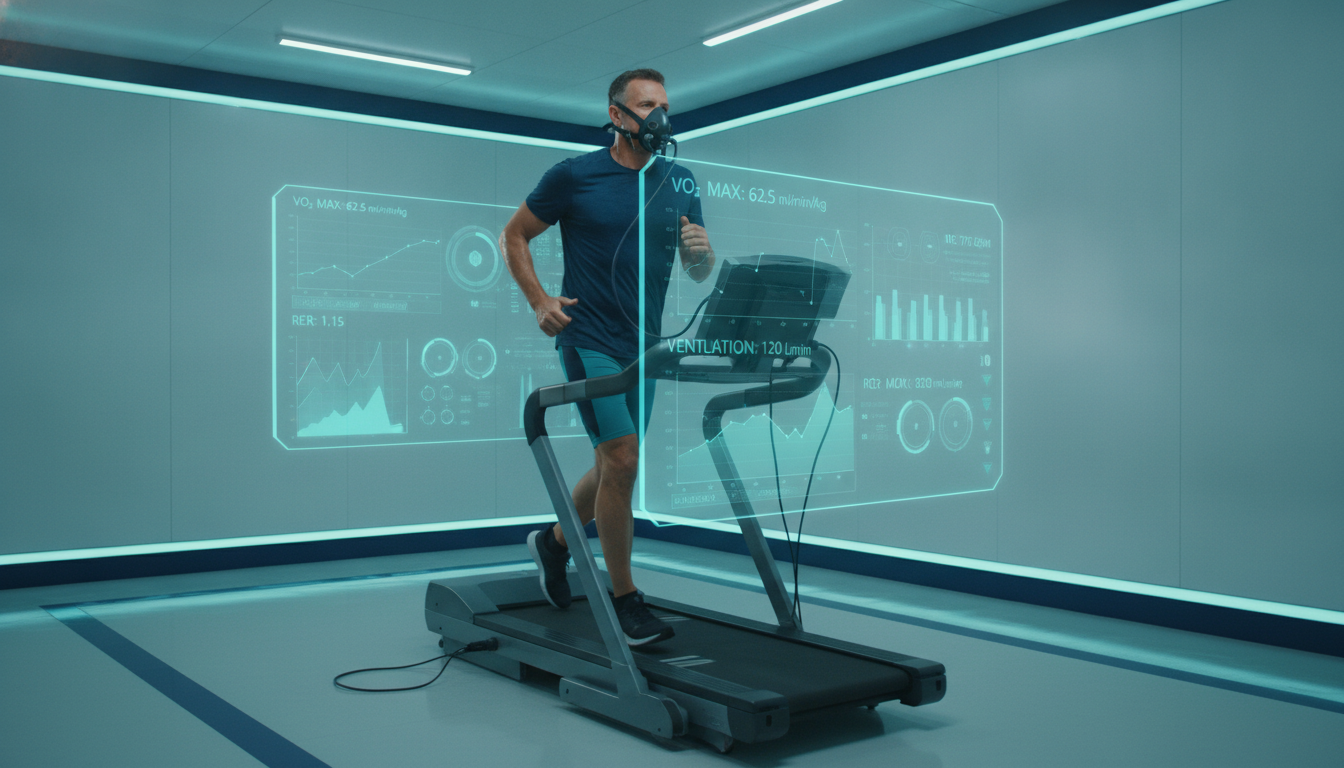
VO2 max is the maximum oxygen your body can use per minute during intense exercise. It’s usually measured in milliliters per kilogram of body weight (in plain English: how much oxygen your engine can burn at full throttle). Labs measure it directly with a mask and treadmill. Wearables and field tests estimate it (ACSM Guidelines for Exercise Testing, 2021).
How it works
Picture your cardiovascular system as a delivery network. The heart is the pump. Blood vessels are the roads. Mitochondria (in plain English: the tiny structures inside cells that turn oxygen into usable energy) are the factories receiving the shipment. VO2 max reflects how well that whole chain works together, all in one number.
Who asks about it
Most people asking about VO2 max have seen it called a longevity marker. They want two things: where they stand against others their age, and what actually moves the needle. Few ask because a doctor ordered the test. It’s usually curiosity driven by the research.
What the research says
A large 2018 study of over 122,000 adults found higher cardiorespiratory fitness was tied to progressively lower mortality risk (Mandsager et al., JAMA Network Open, 2018). The fittest group showed substantially better long-term survival than the least-fit group. The benefit kept climbing at the very top end, with no ceiling seen in that data. Training studies show VO2 max responds to both moderate-intensity endurance work and high-intensity intervals (Bacon et al., Sports Medicine, 2013).
What to know before considering it
VO2 max testing is generally low-risk. Maximal-effort lab tests are physically demanding, though, and should be cleared by a physician if you have cardiovascular risk factors. Field-test estimates are less precise than lab measurements. No peptide or supplement substitutes for structured training when it comes to raising this number.
The Halftime POV
VO2 max is one of the few longevity metrics we’d call genuinely earned. You can’t shortcut your way to a better number. We like that honesty. It rewards the unglamorous, consistent training most people already know they should be doing.
Related reading:
- VO2 max explained: what this longevity metric measures
- How VO2 max reflects heart and mitochondrial capacity
- Who should track VO2 max and at what frequency
- VO2 Max and Longevity: What the Research Shows
FAQ
What is a good VO2 max for my age? Good VO2 max ranges drop with age and differ by sex, but the more useful benchmark is your percentile against peers your age, since even a moderate percentile is linked to meaningfully lower mortality risk.
How often should I retest my VO2 max? Most people benefit from retesting every 3 to 6 months if actively training, since meaningful changes in cardiorespiratory fitness take weeks to months to show up on a test.
How do I improve my VO2 max? Zone 2 training (steady, moderate-intensity cardio) builds the aerobic base, while high-intensity interval sessions push the ceiling higher. Most improvement plans combine both.
Can peptides improve VO2 max? No peptide is FDA-approved to improve VO2 max, and the direct evidence linking peptide use to measured VO2 max improvement in humans is limited. Structured aerobic training remains the best-supported approach.
Disclaimer
This article is educational and is not medical advice. Compounded medications are not FDA-approved. Clinical outcomes depend on individual factors and require physician evaluation. Results vary. Halftime Health is launching soon — join the waitlist to get updates.
Get updates
Halftime Health is launching soon. We’ll share what we learn along the way — the research, the regulations, the real-world trade-offs. Join the waitlist and we’ll email you when we’re live.
Sources
- Mandsager, K., et al. “Association of Cardiorespiratory Fitness With Long-term Mortality Among Adults Undergoing Exercise Treadmill Testing.” JAMA Network Open, 2018: https://www.ncbi.nlm.nih.gov/pmc/articles/PMC6134435/
- Bacon, A.P., et al. “VO2max trainability and high intensity interval training in humans: a meta-analysis.” PLOS ONE / Sports Medicine, 2013: https://pubmed.ncbi.nlm.nih.gov/30646252/
Sources & references
- ncbi.nlm.nih.gov — https://www.ncbi.nlm.nih.gov/pmc/articles/PMC6134435/
- pubmed.ncbi.nlm.nih.gov — https://pubmed.ncbi.nlm.nih.gov/30646252/