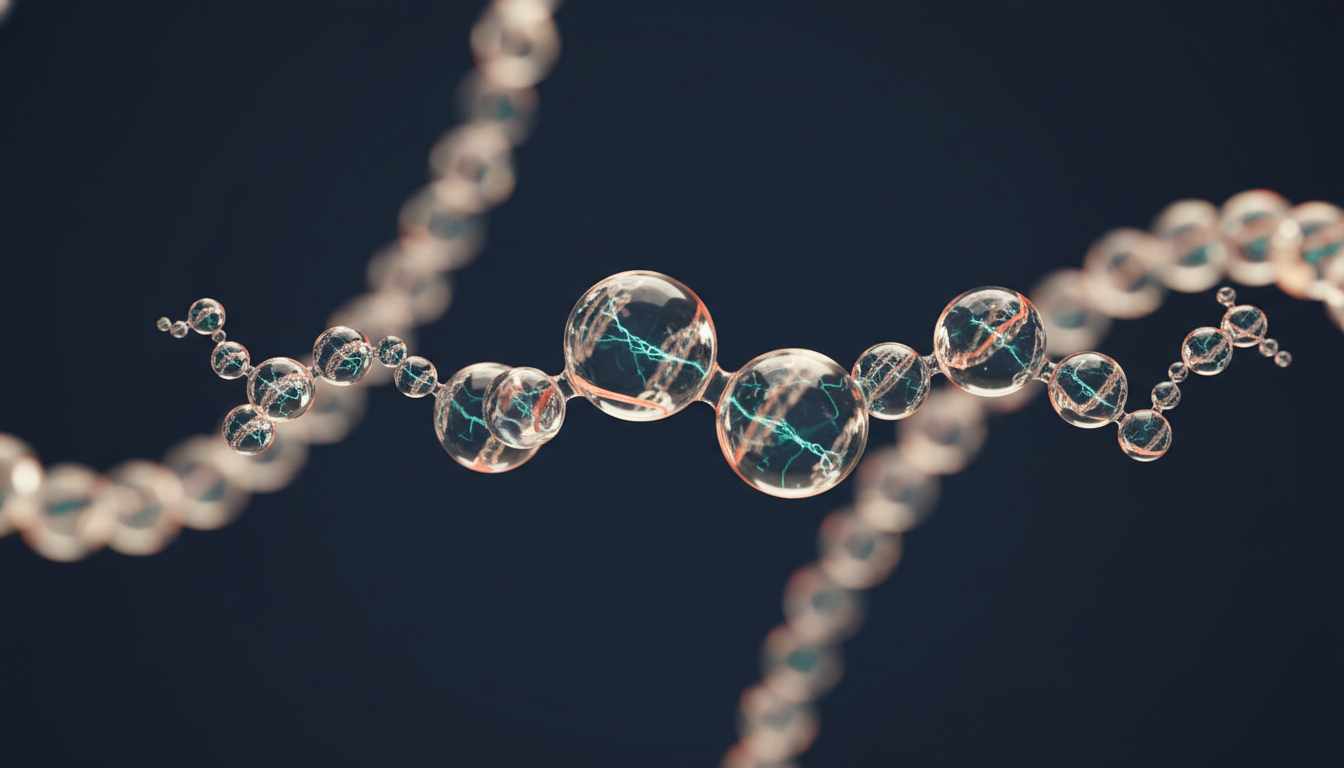
BPC-157: what this body protection compound actually is
A 15-amino-acid synthetic fragment of a protein found in human gastric juice — and one of the most-studied peptides in the preclinical literature.
TL;DR
- BPC-157 is a synthetic 15-amino-acid peptide based on a partial sequence of Body Protection Compound, a larger protein originally isolated from human gastric juice.
- It is unusual among peptides for its apparent stability in the gastrointestinal environment, which is part of why it has been so heavily investigated in animal models.
- As of April 2026, BPC-157 is classified by the FDA as Category 2 and is not available through licensed 503A compounding pharmacies. Halftime Health does not offer it.
What it is
BPC-157 stands for “Body Protection Compound, fragment 15.” The peptide is a laboratory-synthesized 15-amino-acid sequence drawn from a much larger protein — Body Protection Compound — that was first identified in human gastric juice in the early 1990s by Croatian researcher Predrag Sikiric and colleagues (Sikiric et al., Journal of Physiology - Paris, 1993). The name reflects the original hypothesis: that this protein helped protect the lining of the stomach from the harsh chemistry of digestion.
What makes the synthetic fragment distinct is its stability. Most peptides are broken down quickly by digestive enzymes and acid. BPC-157, in animal studies, appears to remain biologically active even after oral administration — a property that is unusual enough to have driven much of the research interest.
How it differs from the native protein
The full-length Body Protection Compound found in gastric juice is a much larger molecule. BPC-157 is a defined 15-amino-acid synthetic sequence (with the chemical structure GEPPPGKPADDAGLV) that researchers can produce reproducibly in a lab. Almost all published research uses this synthetic fragment rather than the native protein.
Who asks about it
People come to this topic when they have heard about BPC-157 in the context of tendon healing, gut health, or peptide protocols, and want to understand what it actually is before going further. They also ask when they are trying to understand why it cannot be prescribed through a licensed pharmacy in the United States as of 2026.
What the research says
The peer-reviewed literature on BPC-157 is dominated by preclinical studies — primarily in rats and mice — investigating its effects on tissue repair, inflammation, and gastrointestinal protection (Sikiric et al., Current Pharmaceutical Design, 2018). Robust human clinical trial data is limited, and this gap is one of the central reasons for its current FDA Category 2 status.
What to know before considering it
BPC-157 is not currently available through Halftime Health. It is a Category 2 peptide as of April 2026, which means licensed 503A compounding pharmacies cannot legally prepare it. Vendors marketing BPC-157 for human use outside that framework are operating outside the legal compounding pathway. This article is educational only.
The Halftime POV
BPC-157 is genuinely one of the more interesting peptides in the preclinical literature — and also one of the clearest examples of why the gap between animal studies and human clinical practice matters. The research base is large but mostly preclinical. The right posture is curiosity paired with patience for the regulatory and evidentiary process to play out.
Related reading:
- How BPC-157 works: the mechanism behind the research
- BPC-157 and the FDA: Category 2 status and what comes next
- Category 1 vs Category 2 peptides: the access framework
FAQ
Q: What is BPC-157? A: BPC-157 is a synthetic 15-amino-acid peptide derived from a partial sequence of Body Protection Compound, a protein originally isolated from human gastric juice. It has been investigated in preclinical research for its apparent stability in the digestive environment and its effects on tissue repair and inflammation.
Q: Is BPC-157 the same as BPC? A: No. BPC (Body Protection Compound) is the larger native protein found in gastric juice. BPC-157 is a 15-amino-acid stable fragment of that protein, synthesized in a laboratory. Most published research is on the synthetic fragment, not the native protein.
Q: Is BPC-157 available through Halftime Health? A: No. BPC-157 is currently classified as a Category 2 peptide by the FDA, which means it cannot legally be prepared by 503A compounding pharmacies. A February 2026 HHS announcement proposed returning BPC-157 to Category 1, but as of April 2026 that change is not yet effective. Halftime Health does not offer Category 2 peptides.
Disclaimer
As of April 2026, BPC-157 is classified by the FDA as a Category 2 peptide and is not available through licensed 503A compounding pharmacies. A February 2026 HHS announcement proposed returning BPC-157 to Category 1 pending formal FDA Federal Register notice. Halftime Health does not currently offer BPC-157. This article is educational only and is not medical advice. Compounded medications are not FDA-approved. Clinical outcomes depend on individual factors and require physician evaluation.
Get updates
Halftime Health is launching soon. We’ll share what we learn along the way — the research, the regulations, the real-world trade-offs. Join the waitlist and we’ll email you when we’re live.
Sources
- Sikiric P, et al. A new gastric juice peptide, BPC. An overview of stomach-stress-organoprotection hypothesis and beneficial effects of BPC. Journal of Physiology - Paris, 1993.
- Sikiric P, et al. Stable Gastric Pentadecapeptide BPC 157: Novel Therapy in Gastrointestinal Tract. Current Pharmaceutical Design, 2018.
This article discusses compounds that are currently under FDA Category 2 review (see our FDA categorization explainer). These compounds are not currently part of Halftime Health’s published protocol catalog. This article is provided for educational purposes only and does not constitute medical advice or an offer to sell.
Sources & references
- pubmed.ncbi.nlm.nih.gov — https://pubmed.ncbi.nlm.nih.gov/9168202/
- ncbi.nlm.nih.gov — https://www.ncbi.nlm.nih.gov/pmc/articles/PMC6471284/