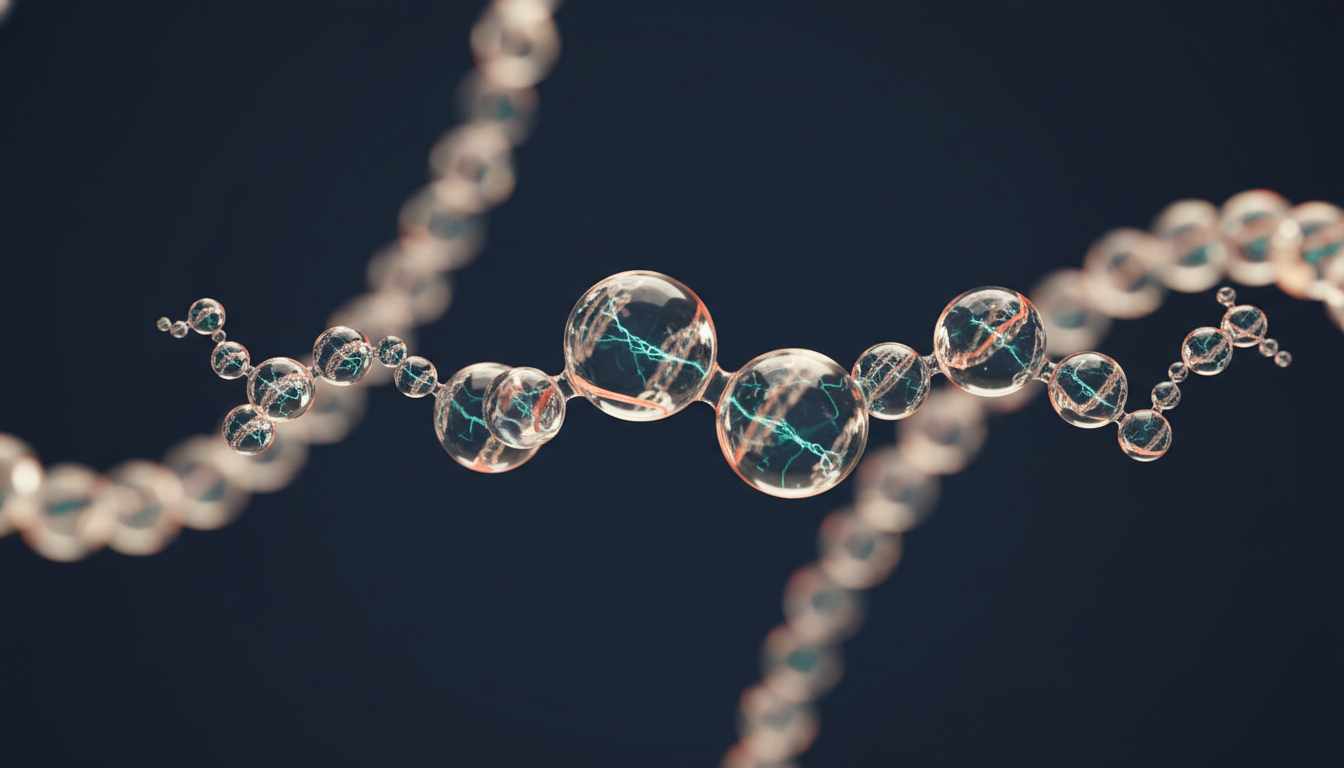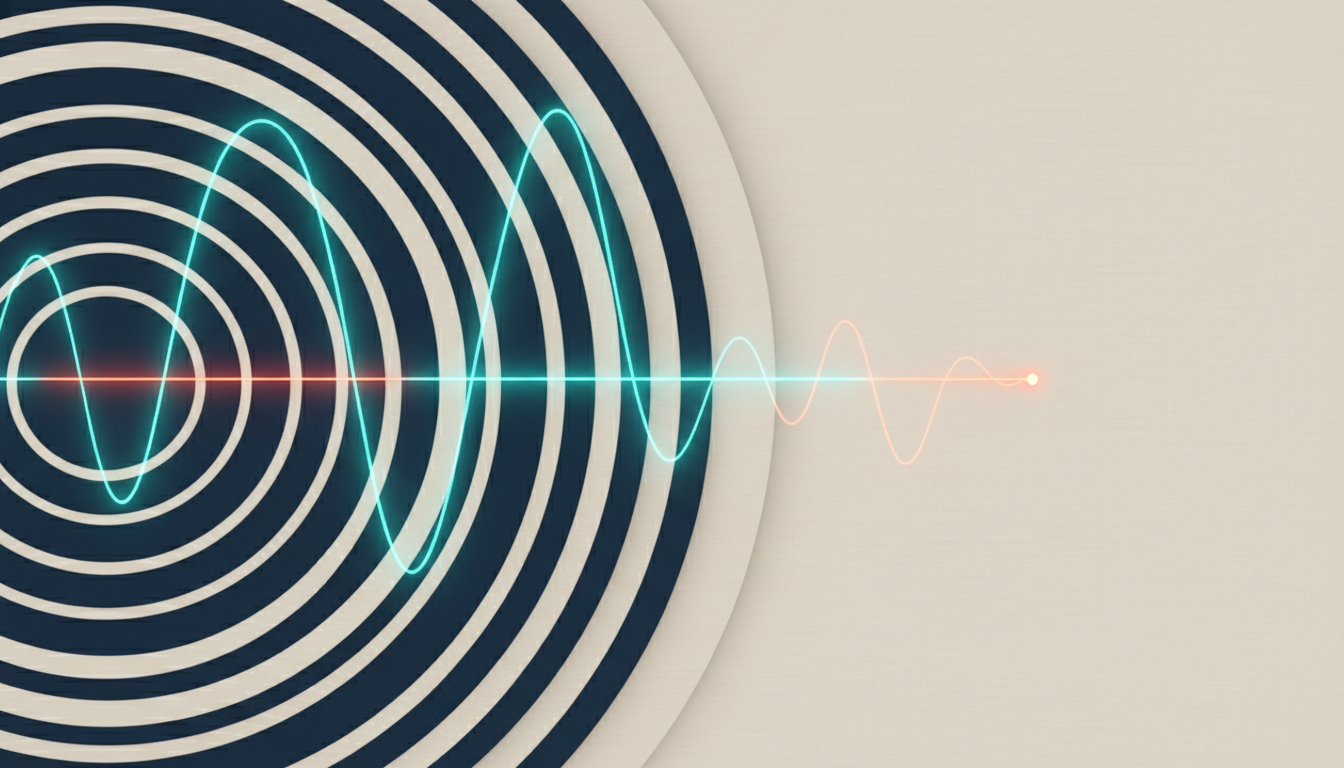
How CJC-1295 extends GHRH signaling: the mechanism
Same receptor as sermorelin. Much longer staying power.
TL;DR
- CJC-1295 binds the same pituitary receptor as the body’s own GHRH and asks the gland for a natural growth hormone pulse.
- A small chemical modification called DAC (drug affinity complex) lets it ride along on albumin in the blood, stretching its working life from minutes to days.
- Compounded CJC-1295 is not FDA-approved and requires a licensed clinician’s evaluation.
What it is
CJC-1295 is a modified copy of GHRH (in plain English: growth hormone-releasing hormone — the brain’s signal that tells the pituitary to release growth hormone). The modification is small but consequential: a chemical handle called DAC (drug affinity complex) is attached to the molecule. That handle does one thing — it grabs onto albumin, a carrier protein in your blood (Teichman et al., J Clin Endocrinol Metab, 2006).
How it works
Think of GHRH as a doorbell wired to a kitchen timer. Press it, the timer rings briefly, then resets. The body’s own GHRH presses that doorbell every couple of hours during sleep. Plain sermorelin presses it the same way — but the press fades within minutes. CJC-1295 with DAC is the same doorbell press, but the finger stays gently on the button for days. Albumin is the “finger.” That extended press lets the pituitary release growth hormone in several normal pulses rather than one short burst (Ionescu & Frohman, J Clin Endocrinol Metab, 2006).
Who asks about it
People usually arrive here after reading about CJC-1295 and ipamorelin combinations and wanting to understand what each piece actually does. The short answer: CJC-1295 holds the doorbell down. Ipamorelin walks up and rings a different bell on the same door at the same time.
What the research says
Published trials in healthy adults show that a single dose of CJC-1295 with DAC raises IGF-1 (a downstream marker of growth hormone activity) for roughly 6 to 11 days, with growth hormone pulses preserved rather than flattened (Teichman et al., 2006). The literature is small. Most of it is short-term safety and pharmacokinetics, not long-term outcomes.
What to know before considering it
CJC-1295 is not appropriate for people with active cancer, untreated retinopathy, or certain pituitary conditions. Side effects in trials included injection-site reactions and occasional flushing. Compounded CJC-1295 is not FDA-approved. Any access requires a licensed clinician.
The Halftime POV
Mechanism matters because it sets the conversation. CJC-1295 is not “stronger” growth hormone. It is a longer-lasting version of the body’s own request. That distinction shapes dosing, monitoring, and honest expectations.
Related reading:
- CJC-1295: what this modified GHRH peptide is
- How sermorelin signals growth hormone release
- The growth hormone axis explained
FAQ
Q: How does CJC-1295 work? A: CJC-1295 binds to the GHRH receptor on pituitary cells and signals the gland to release growth hormone in its natural pulse pattern. A small chemical modification (DAC, drug affinity complex) lets it bind to albumin in the blood, which extends its working life from minutes to days.
Q: What does the DAC modification do? A: DAC stands for drug affinity complex. It is a small chemical handle that lets CJC-1295 attach to albumin, a carrier protein in the bloodstream. The handle keeps the molecule from being cleared quickly, so it stays active for several days rather than minutes.
Q: Is CJC-1295 FDA-approved? A: No. CJC-1295 is not FDA-approved as a finished drug product. Compounded CJC-1295 is prepared by state-licensed 503A pharmacies and is not FDA-approved. Use is off-label and requires a licensed clinician’s evaluation.
Disclaimer
This article is educational and is not medical advice. Compounded medications are not FDA-approved. Clinical outcomes depend on individual factors and require physician evaluation. Results vary. Halftime Health is launching soon — join the waitlist to get updates.
Get updates
Halftime Health is launching soon. We’ll share what we learn along the way — the research, the regulations, the real-world trade-offs. Join the waitlist and we’ll email you when we’re live.
Sources
- Teichman SL, et al. Prolonged stimulation of growth hormone (GH) and insulin-like growth factor I secretion by CJC-1295. J Clin Endocrinol Metab, 2006.
- Ionescu M, Frohman LA. Pulsatile secretion of growth hormone in the presence of a long-acting GHRH analog. J Clin Endocrinol Metab, 2006.
This article discusses compounds that are currently under FDA Category 2 review (see our FDA categorization explainer). These compounds are not currently part of Halftime Health’s published protocol catalog. This article is provided for educational purposes only and does not constitute medical advice or an offer to sell.
Sources & references
- pubmed.ncbi.nlm.nih.gov — https://pubmed.ncbi.nlm.nih.gov/16352683/
- pubmed.ncbi.nlm.nih.gov — https://pubmed.ncbi.nlm.nih.gov/15827095/