How collagen synthesis works and where it declines with age
The mechanism in plain English — fibroblasts, vitamin C, and the cross-linking step that gives skin its bounce.
TL;DR
- Collagen is built by fibroblasts (in plain English: skin’s construction workers) using amino acids, vitamin C, and oxygen.
- The fibers are spun into a triple-helix rope, then cross-linked for tensile strength — the part that gives skin its bounce.
- After about age 30, fibroblast output slows by roughly 1% per year. Estrogen loss in midlife accelerates the slowdown for women.
What it is
Collagen is the most common protein in the human body. It is the rope inside skin, tendons, blood vessels, and bone — the structural fiber that lets tissues stretch and snap back without tearing. The synthesis process is well-mapped. The decline curve is too. What changes with age is not the recipe; it is the kitchen.
How it works
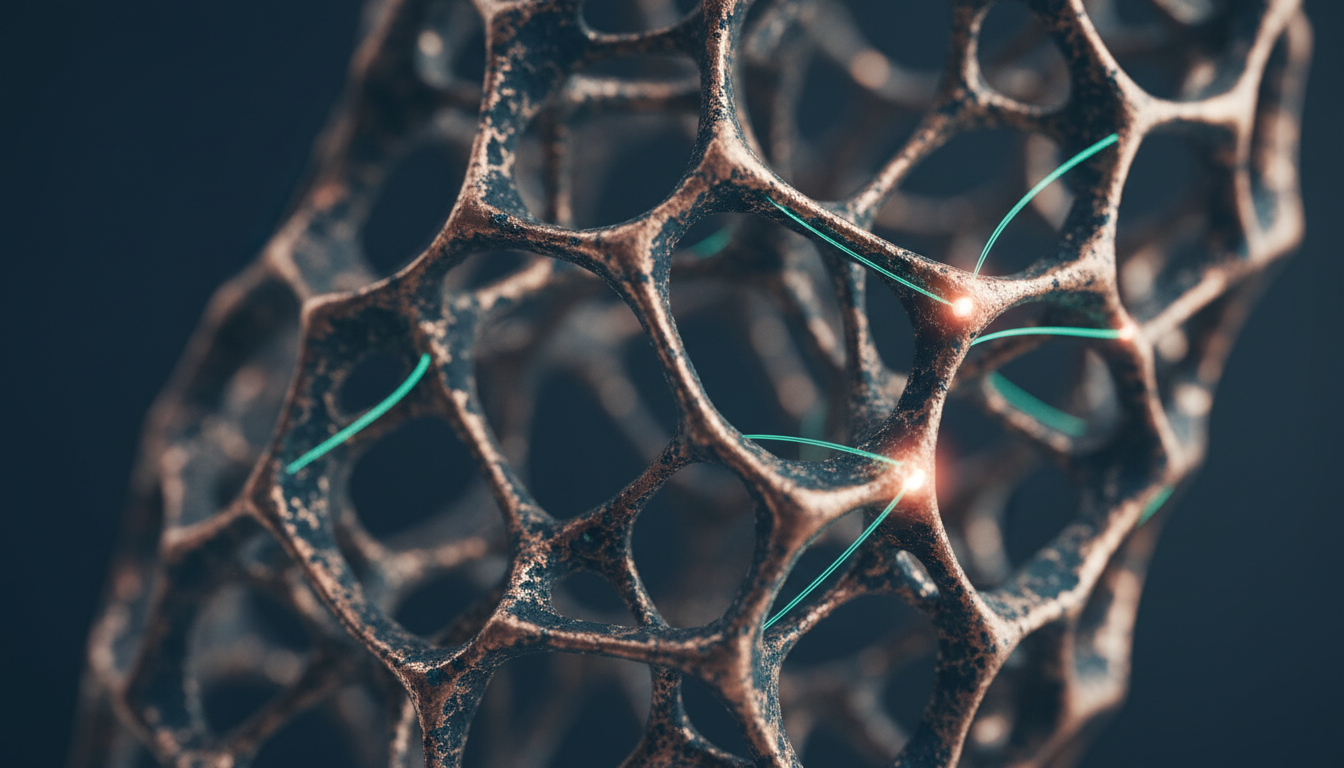
Picture a small factory inside the skin. The workers are fibroblasts. They string amino acids — glycine, proline, lysine — into long chains called procollagen. Two enzymes (prolyl hydroxylase and lysyl hydroxylase) then add tiny molecular hooks. Those hooks let three chains twist together into a triple helix, which is then bundled into fibers and cross-linked outside the cell. The cross-linking is the step that turns soft thread into structural rope. Vitamin C is required for the hydroxylation step (NIH Bookshelf — Molecular Cell Biology, Collagen).
Who asks about it
People come to this topic when they notice skin changes in their 40s — thinner, slower to bounce back, more prone to creasing — and want to understand whether the change is reversible, slowable, or just inevitable. They also ask before spending on supplements or topicals.
What the research says
Skin collagen content drops by roughly 1% per year after about age 30, and the rate roughly doubles in the first five years after menopause as estrogen falls (Brincat MP, et al. The hormonal basis of skin aging, 2012). UV exposure, smoking, high blood sugar, and chronic sleep loss all accelerate fiber breakdown. The published literature is consistent on what slows the decline: sun protection, adequate protein and vitamin C intake, resistance training, and managing UV and metabolic load. Topical and injectable peptides — including GHK-Cu — are studied as supportive tools, not silver bullets.
What to know before considering it
No single product rebuilds collagen overnight. The biology is slow, and the research-backed levers are mostly lifestyle: protein intake of about 1.2–1.6 grams per kilogram body weight per day, sun protection, and sleep. Topical products and peptides may add a meaningful but modest assist on top of those basics — not in place of them.
The Halftime POV
Collagen science is one of the cleanest examples of “boring biology beats glossy marketing.” The triple-helix story is over a century old, the decline curve is well-documented, and the fixes are unglamorous: SPF, protein, sleep, training, and — when appropriate — a clinician-guided peptide protocol on top.
Related reading:
- Collagen and skin: a primer for women at midlife
- Collagen synthesis: what the literature shows
- How GHK-Cu promotes collagen synthesis
- Skin peptides 101 for women
FAQ
Q: How does the body make collagen? A: Specialized cells called fibroblasts string amino acids into procollagen, then enzymes hydroxylate and cross-link the fibers into a strong triple helix that gives skin, tendons, and bone their structure.
Q: Why does collagen decline with age? A: Fibroblast activity slows, hydroxylation enzymes get less efficient, and oxidative damage breaks existing fibers faster than the body rebuilds them. Estrogen loss in midlife accelerates the slowdown in women.
Q: What helps support collagen synthesis? A: Vitamin C is required for the hydroxylation step. Adequate dietary protein supplies the building blocks. Sun protection, sleep, and not smoking matter more than most topical products.
Disclaimer
This article is educational and is not medical advice. Individual response varies. Halftime Health is launching soon — join the waitlist to get updates.
Get updates
Halftime Health is launching soon. We’ll share what we learn along the way — the research, the regulations, the real-world trade-offs. Join the waitlist and we’ll email you when we’re live.
Sources
- Lodish H et al. Molecular Cell Biology — Collagen: The Fibrous Proteins of the Matrix (NIH Bookshelf)
- Brincat MP, et al. The hormonal basis of skin aging. Climacteric. 2012
Sources & references
- ncbi.nlm.nih.gov — https://www.ncbi.nlm.nih.gov/books/NBK21582/
- pubmed.ncbi.nlm.nih.gov — https://pubmed.ncbi.nlm.nih.gov/22928287/