GHK-Cu: what the copper peptide actually is
A three-amino-acid molecule with a 50-year research history — explained without the marketing.
TL;DR
- GHK-Cu is a tiny natural peptide that binds one copper atom — first identified in human blood in 1973.
- It has been studied for skin repair, wound healing, and hair follicle support over five decades of published research.
- Most evidence is on skin applications. Other uses have smaller, earlier-stage data.
What it is
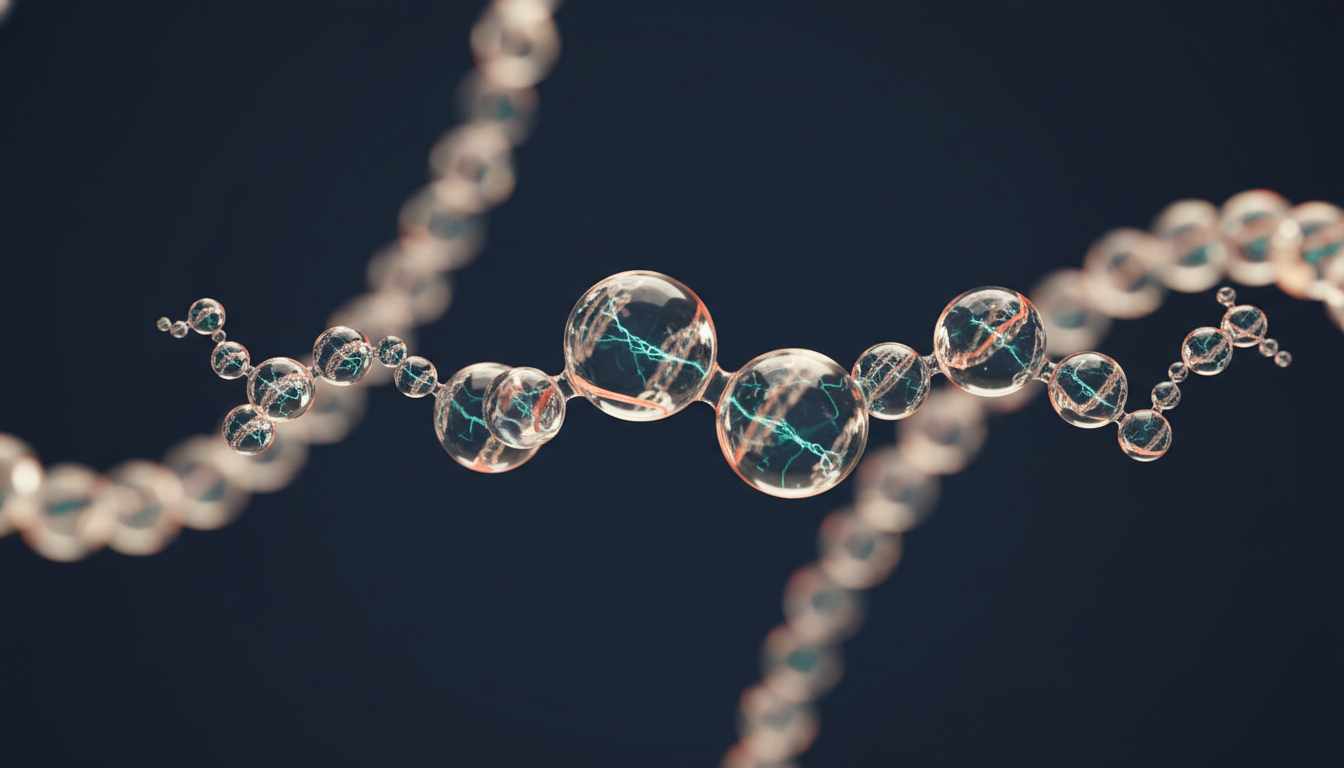
GHK-Cu (in plain English: a three-letter peptide — glycine, histidine, lysine — bonded to a copper ion) is one of the smallest peptides studied in medicine. It is naturally present in human plasma (the liquid part of blood). Levels drop with age — from around 200 nanograms per milliliter at age 20 to about half that at 60, per Pickart and Margolina, 2018. Think of GHK-Cu as a copper-carrying shuttle. The copper is the working ingredient. The peptide is the delivery package.
How it works
Copper is involved in dozens of biological processes — wound repair, collagen formation, antioxidant defense. Free copper is reactive and not always safe to circulate alone. GHK-Cu holds copper in a stable, biologically usable form and delivers it where needed. When applied to skin, GHK-Cu appears to support fibroblast activity (in plain English: the cells that produce collagen and elastin, the proteins that keep skin firm) and modulate signals tied to wound healing per Pickart, 2012.
Who asks about it
People come to GHK-Cu after seeing it on a skincare ingredient list and wondering if it actually does anything. Or after a friend mentions a copper-peptide serum. Or as part of a broader curiosity about peptide-based skin therapy. The peptide world calls it the “skin peptide” — but the research base is broader than skin.
What the research says
GHK-Cu has one of the longer peer-reviewed track records of any peptide discussed in this category — over 200 published papers. Most show effects on skin parameters: collagen synthesis, fibroblast activity, wound-closure rates in laboratory and animal models. Human dermatological studies are smaller but consistent, showing measurable changes in skin firmness and fine-line appearance. The hair-follicle literature is earlier-stage.
What to know before considering it
Topical GHK-Cu has a well-tolerated profile per the published literature. Injectable preparations from 503A pharmacies require a prescription and clinician evaluation. Copper sensitivity is rare but real — anyone with a Wilson’s disease history (a copper-handling disorder) should not use it.
The Halftime POV
GHK-Cu is one of the more research-supported peptides in the broader category — partly because it’s been studied since the 1970s. We treat it the way we treat any peptide: a clinician decides if it is the right tool for a given person, after baseline labs and a real conversation about goals.
Related reading:
- GHK-Cu topical vs injectable: delivery differences
- Skin peptide research: the published dermatology evidence
- What are peptides? A plain-English primer
Disclaimer
This article is educational and is not medical advice. Compounded medications are not FDA-approved. Clinical outcomes depend on individual factors and require physician evaluation. Results vary. Halftime Health is launching soon — join the waitlist to get updates.
Get updates
Halftime Health is launching soon. We’ll share what we learn along the way — the research, the regulations, the real-world trade-offs. Join the waitlist and we’ll email you when we’re live.
Sources
Sources & references
- pubmed.ncbi.nlm.nih.gov — https://pubmed.ncbi.nlm.nih.gov/26770294/
- pubmed.ncbi.nlm.nih.gov — https://pubmed.ncbi.nlm.nih.gov/22272169/