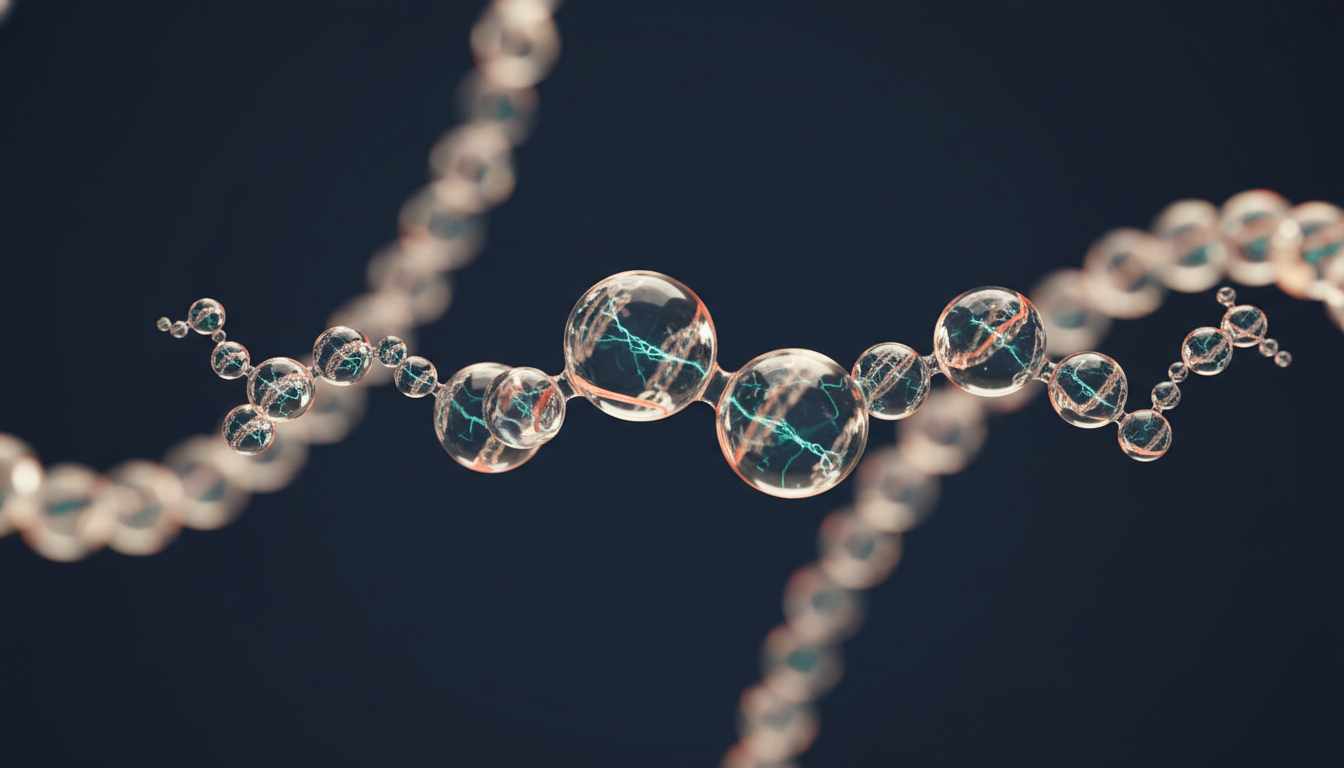
Peptide 101: the most-asked beginner questions answered
The five questions we get every week, answered plainly.
TL;DR
- Peptides are short chains of amino acids — the body uses them as signaling messengers, not building blocks.
- Therapeutic peptides require a prescription and come from licensed 503A compounding pharmacies.
- Timelines vary by peptide: sleep-related effects come fast, growth-hormone effects take 8–12 weeks.
What it is
A peptide (in plain English: a short chain of amino acids, usually shorter than 50) is the messenger that tells different parts of the body what to do. Insulin tells cells to take in sugar. Oxytocin tells the brain to feel bonded. Glucagon tells the liver to release glucose. Think of peptides like text messages between organs — short, specific, and delivered to one address. About 4 in 10 prescription drugs approved in the last decade have been peptides or peptide-related molecules.
How it works
A peptide attaches to a receptor on the outside of a cell — the same way a key fits one specific lock, per Lau and Dunn, 2018. The receptor then triggers a cascade of activity inside the cell. Because the fit is so specific, peptides generally produce fewer off-target effects than small-molecule drugs that bind more broadly. That precision is the point of the category.
Who asks about it
People come to peptide-101 questions when they hear a friend mention BPC-157, see a podcast clip on GLP-1, or notice their primary care doctor doesn’t bring it up. The category is new enough that the language is unfamiliar. Most readers want a friendly map before they decide if any of this is for them.
What the research says
Peptide therapeutics is one of the fastest-growing classes in pharmaceutical research. The FDA approves several new peptide drugs each year. The compounding side is more variable — what is available from a 503A pharmacy depends on the 503A bulks list, which the FDA updates periodically.
What to know before considering it
Any peptide protocol requires a licensed clinician evaluation. Baseline bloodwork is standard. Injection technique matters. Storage matters (most peptides need refrigeration once reconstituted). And the regulatory landscape changes — what is available today may shift after the next FDA review.
The Halftime POV
The hardest part of peptide therapy is not the science — it is the gatekeeping. Most reliable answers sit behind paywalls or in marketing copy. We started Halftime Health to give the second-half-of-life reader plain answers without the hype.
Related reading:
- What are peptides? A plain-English primer
- How subcutaneous peptide injections work
- The three-category peptide access model
Disclaimer
This article is educational and is not medical advice. Compounded medications are not FDA-approved. Clinical outcomes depend on individual factors and require physician evaluation. Results vary. Halftime Health is launching soon — join the waitlist to get updates.
Get updates
Halftime Health is launching soon. We’ll share what we learn along the way — the research, the regulations, the real-world trade-offs. Join the waitlist and we’ll email you when we’re live.
Sources
This article discusses compounds that are currently under FDA Category 2 review (see our FDA categorization explainer). These compounds are not currently part of Halftime Health’s published protocol catalog. This article is provided for educational purposes only and does not constitute medical advice or an offer to sell.
Sources & references
- ncbi.nlm.nih.gov — https://www.ncbi.nlm.nih.gov/pmc/articles/PMC6332632/
- fda.gov — https://www.fda.gov/drugs/human-drug-compounding/503a-bulks-list-final-rule