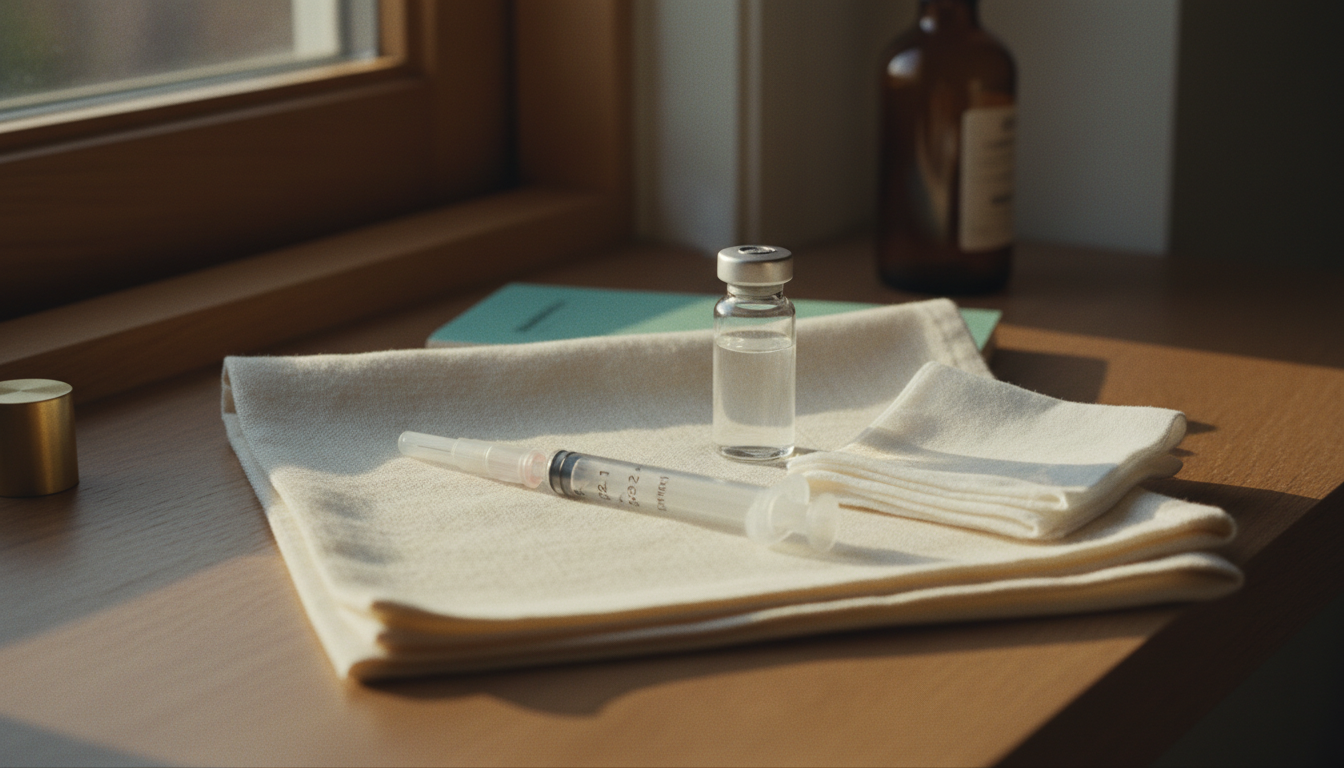
How subcutaneous peptide injections work
Most peptides are delivered just below the skin — not into muscle, not into a vein. Here’s why that route is the standard and what happens after the needle goes in.
TL;DR
- Subcutaneous means below the skin, above the muscle — a well-supplied fat layer that absorbs compounds steadily.
- Peptides degrade in the gut, so oral delivery is largely ineffective; subcutaneous avoids that problem entirely.
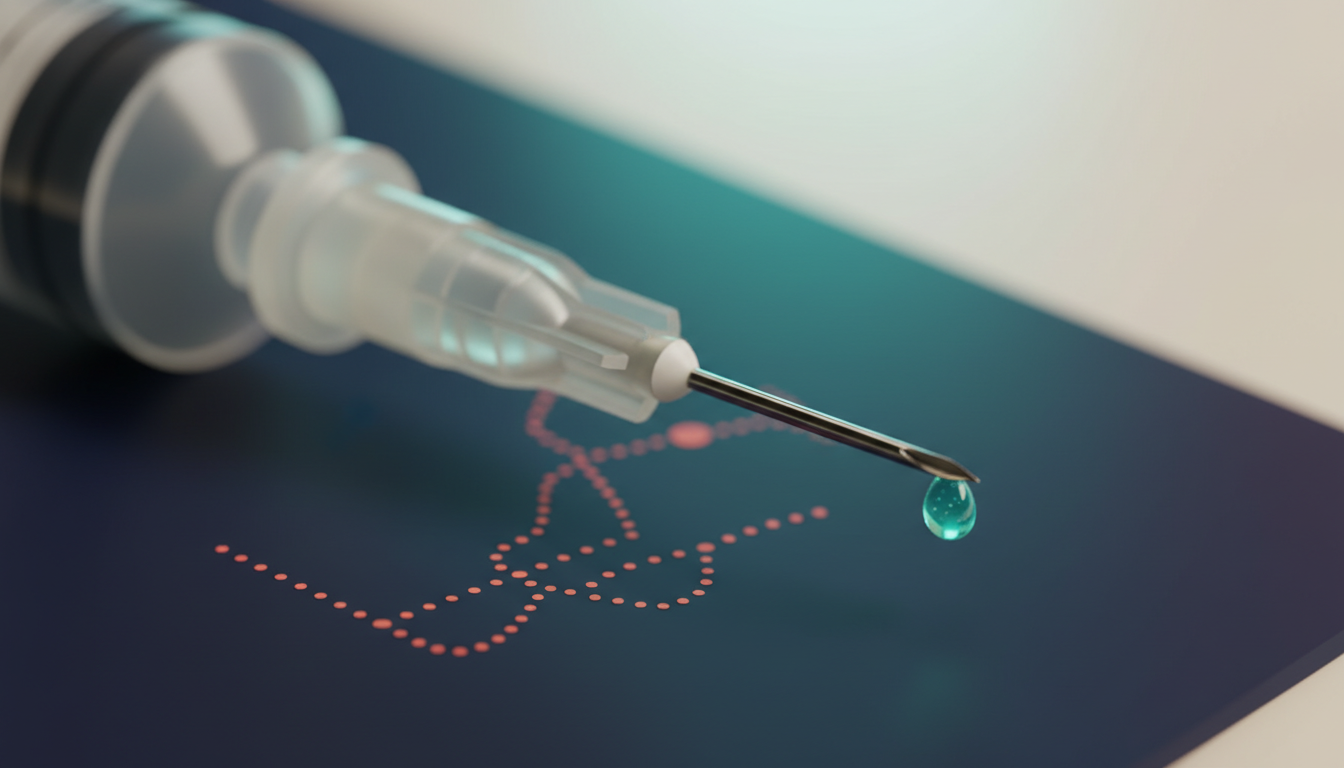
- 29G–31G insulin syringes are standard — a needle finer than a strand of human hair.
What it is
Subcutaneous (SQ) injection deposits a compound into the hypodermis — the fatty tissue that sits directly beneath the skin and above the muscle layer. This tissue is rich in small blood vessels and lymphatic channels, which gradually absorb the compound into systemic circulation. Because absorption is slower than intravenous delivery, the compound enters the bloodstream at a measured pace rather than all at once. For most peptide protocols, that steady-entry profile is the whole point.
How it works
Peptides are chains of amino acids. In the digestive tract, proteolytic enzymes break those chains apart before they can reach circulation — which is why oral bioavailability is negligible for most therapeutic peptides (NIH MedlinePlus, 2023). Injecting subcutaneously bypasses the gut entirely. The compound sits in the fatty layer, diffuses through the capillary walls, and enters the bloodstream. The diagram below shows the needle’s target depth relative to skin, fat, and muscle.
Who asks about it
People new to peptide protocols often come to this question with a mix of curiosity and apprehension — they’ve seen the phrase “self-administered injection” and want to understand what that actually means before they agree to it. The mechanical picture (a very fine needle, a shallow target, a familiar insulin-syringe format) answers most of that apprehension directly.
What the research says
The CDC’s injection-safety guidance documents subcutaneous delivery as a well-established administration route, noting that proper technique — correct angle, correct depth, and clean-site preparation — is the primary determinant of tolerability (CDC Injection Safety, 2022). Published literature on insulin and biologic self-injection consistently reports that 29G–31G needles are associated with less reported discomfort than larger gauges.
What to know before considering it
Any peptide protocol that requires self-injection should be initiated under the supervision of a licensed clinician who has reviewed your health history. Proper injection technique, sterile supplies, and correct storage are all part of a complete protocol — not optional add-ons. Individual response to any compounded peptide varies and is not predictable from general population data alone.
The Halftime POV
Most people who’ve been doing SQ injections for a few weeks describe the learning curve as surprisingly short. The needle gauge used for peptides is finer than what most people imagine when they hear “injection,” and the subcutaneous fat layer is forgiving. Understanding the mechanics — what layer you’re targeting and why — tends to make the whole process feel less abstract and more manageable.
Related reading:
FAQ
Q: What is a subcutaneous injection? A: A subcutaneous (SQ) injection deposits a compound into the hypodermis — the fatty tissue layer that sits directly beneath the skin and above the muscle. It is the standard delivery route for most peptides because this layer is rich in capillaries and lymphatic channels that absorb the compound gradually into systemic circulation.
Q: Why can’t peptides be taken as pills? A: Peptides are chains of amino acids. Proteolytic enzymes in the digestive tract break these chains apart before they can reach the bloodstream — oral bioavailability is negligible for most therapeutic peptides. Subcutaneous injection bypasses the digestive system entirely, allowing the compound to enter circulation intact.
Q: What gauge needle is used for peptide injections? A: Most peptide protocols use 29G to 31G insulin syringes, which are among the finest needles manufactured — thinner than a strand of human hair at 31G. The standard length is 5/16 to 1/2 inch, which places the needle tip in the subcutaneous fat layer at approximately 6–12mm depth.
Disclaimer
This article is educational and is not medical advice. Compounded medications are not FDA-approved. Clinical outcomes depend on individual factors and require physician evaluation. Results vary. Halftime Health is launching soon — join the waitlist to get updates.
Get updates
Halftime Health is launching soon. We’ll share what we learn along the way — the research, the regulations, the real-world trade-offs. Join the waitlist and we’ll email you when we’re live.
Sources
- Injection Safety — CDC, 2022
- Subcutaneous Injections — NIH MedlinePlus, 2023
- Peptide therapeutics: current status and future directions — Nature Reviews Drug Discovery, 2021