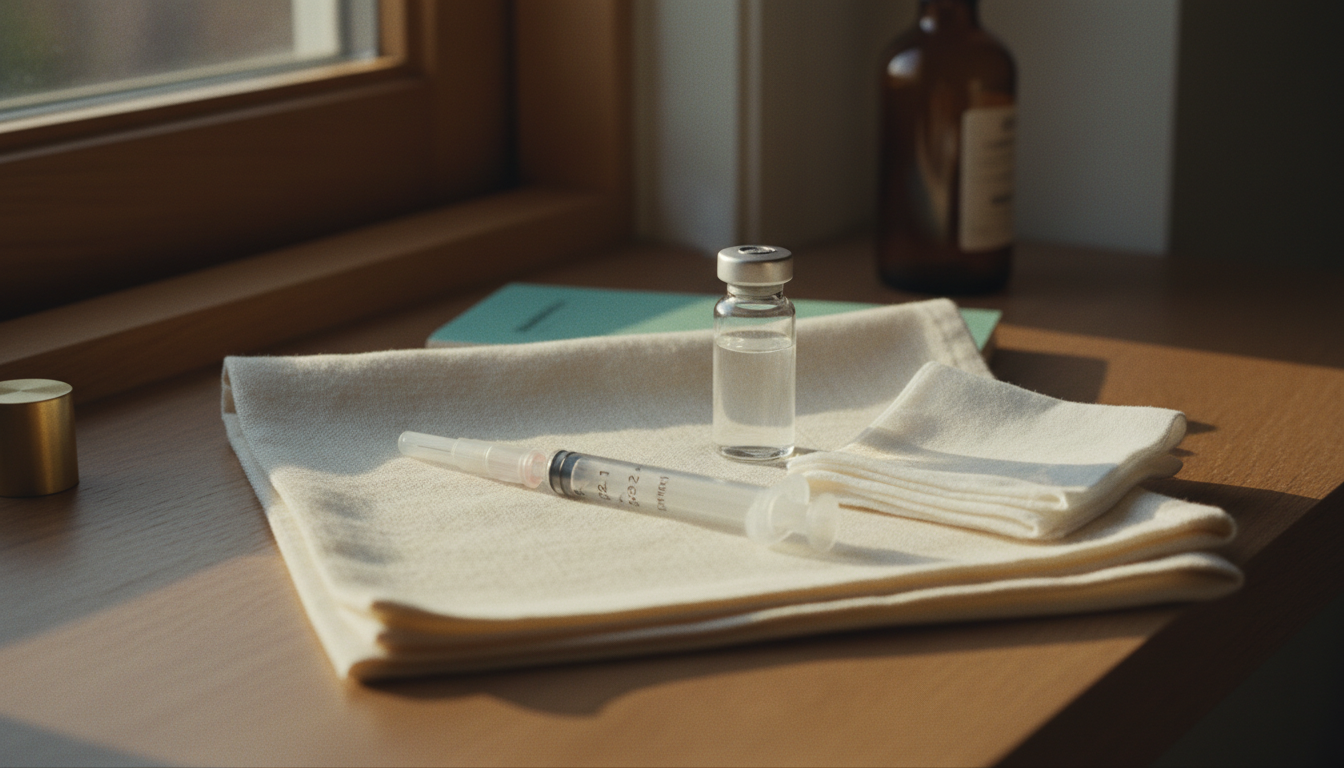
Injection site reactions: what is normal and what to report
A little redness is fine. A spreading red ring is not. Here is how to tell.
TL;DR
- A small pink area, a tiny welt, or mild itching at a peptide injection site is usually normal.
- Worsening pain, spreading redness, warmth, pus, or fever after 24 hours is not normal — call your clinician.
- Rotating sites, drying the alcohol first, warming the vial, and using fresh needles cut reactions down dramatically.
What it is
An injection site reaction (in plain English: the skin’s response to the small wound and the medication just placed under it) is what happens in the first hours and days after a subcutaneous injection. The body recognizes a needle as a minor injury and a peptide as something foreign, even when it is exactly what was prescribed. Some response is expected. The question is which response and how much.
How it works
Think of the skin like a bouncer. A needle gets in, a little fluid gets deposited, and the bouncer sends out the first wave of staff to check things out. That wave is what causes the small bump, the pink halo, and sometimes the itch. The reaction is usually done within 24 to 48 hours. A different situation arises if bacteria get under the skin — that triggers a different alarm. The signs of that second alarm are louder: spreading redness, real pain, warmth, and sometimes a fever. The two reactions look different on purpose. Your body is telling you which one is happening.
Who asks about it
People come to this topic after their first or second injection, look at the site an hour later, and want to know if a quarter-sized pink spot is fine. Most of the time it is. The other group is patients who have been injecting for weeks and notice a site that feels different this time. Both deserve a clear answer.
What the research says
The CDC’s injection administration guidance documents what a routine subcutaneous site looks like in the first 48 hours: a small area of redness, mild swelling, occasional itching, all expected (CDC injection protocols). For peptides specifically, mild local reactions are the most commonly reported side effect across published reviews, with serious reactions like cellulitis or abscess being uncommon when sterile technique is followed (NIH PMC peptide therapeutics review). The lived experience version: about 8 in 10 patients see at least one mild reaction in their first month. Almost none of them progress to something serious. Almost is not none — knowing the difference matters.
What to know before considering it
Rotate sites — abdomen one day, thigh the next, opposite side the day after that. Use a fresh needle every dose. Let the alcohol fully dry before injecting (it stings far less). Warm a refrigerated vial in your hand for a minute. If a site looks worse 24 hours after the shot, photograph it, draw a line around the redness with a pen, and check again in a few hours. If the line is now inside a larger circle, call your clinician.
The Halftime POV
The first month of injections is mostly about pattern recognition. You learn what your body does after a dose. That knowledge is what makes peptide therapy feel routine instead of nerve-wracking. Our job is to give you the rules of thumb up front so the first weird-looking spot is a known thing, not a panic.
Related reading:
- How to give your first peptide injection
- How peptide dosing differs from conventional drug dosing
- How to choose a quality peptide compounding pharmacy
FAQ
Q: Is redness after a peptide injection normal? A: A small area of pink or red skin, a tiny raised bump, or mild itching is usually normal and clears within a day or two.
Q: When should I call a clinician? A: Spreading redness larger than a quarter, warmth and pain that worsens past 24 hours, pus, fever, or a streak running away from the site — call the same day.
Q: What can I do to reduce reactions? A: Rotate sites, let the alcohol dry before injecting, warm the vial in your hand for a minute, and use a fresh needle each time.
Disclaimer
This article is educational and is not medical advice. Compounded medications are not FDA-approved. Clinical outcomes depend on individual factors and require physician evaluation. Results vary. Halftime Health is launching soon — join the waitlist to get updates.
Get updates
Halftime Health is launching soon. We’ll share what we learn along the way — the research, the regulations, the real-world trade-offs. Join the waitlist and we’ll email you when we’re live.
Sources
- CDC: Vaccine Administration Protocols
- Therapeutic peptides: chemistry, manufacture, and clinical applications — NIH PMC, 2018
Sources & references
- cdc.gov — https://www.cdc.gov/vaccines/hcp/admin/admin-protocols.html
- ncbi.nlm.nih.gov — https://www.ncbi.nlm.nih.gov/pmc/articles/PMC6314044/