Sermorelin explained: the GHRH analog
Sermorelin doesn’t introduce growth hormone — it asks your pituitary to release its own.
TL;DR
- Sermorelin is a synthetic analog of GHRH (growth-hormone-releasing hormone) comprising the first 29 amino acids of the natural 44-amino-acid hormone.
- It binds to GHRH receptors on pituitary somatotroph cells, stimulating the pituitary to produce and release growth hormone in its natural pulsatile pattern.
- Sermorelin was once available as a branded pharmaceutical (Geref, Serono) and is now used as a compounded active ingredient; the FDA-approved branded version was discontinued — the active ingredient itself was not banned.
What it is
Growth-hormone-releasing hormone (GHRH) is a 44-amino-acid peptide produced by the hypothalamus. It travels down to the anterior pituitary, where it binds to GHRH receptors on specialized cells called somatotrophs, triggering them to synthesize and secrete growth hormone (GH).
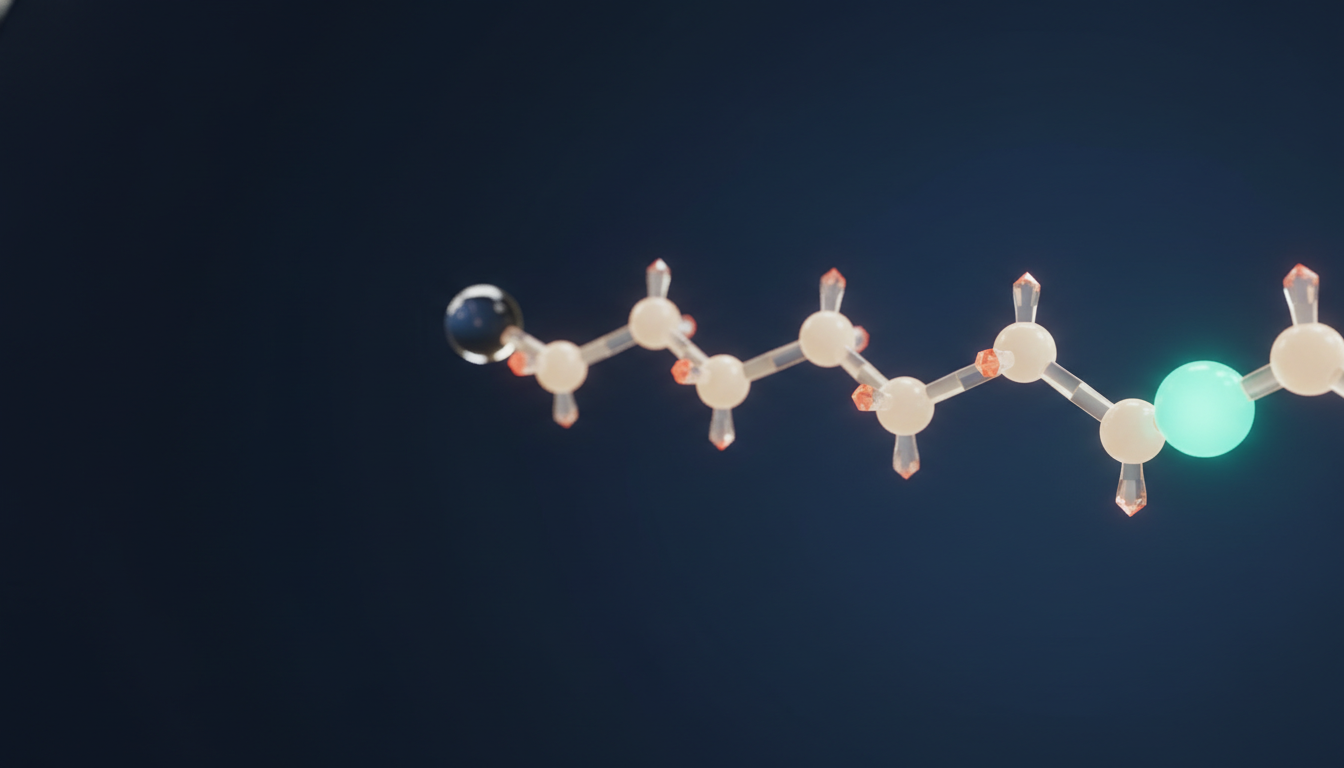
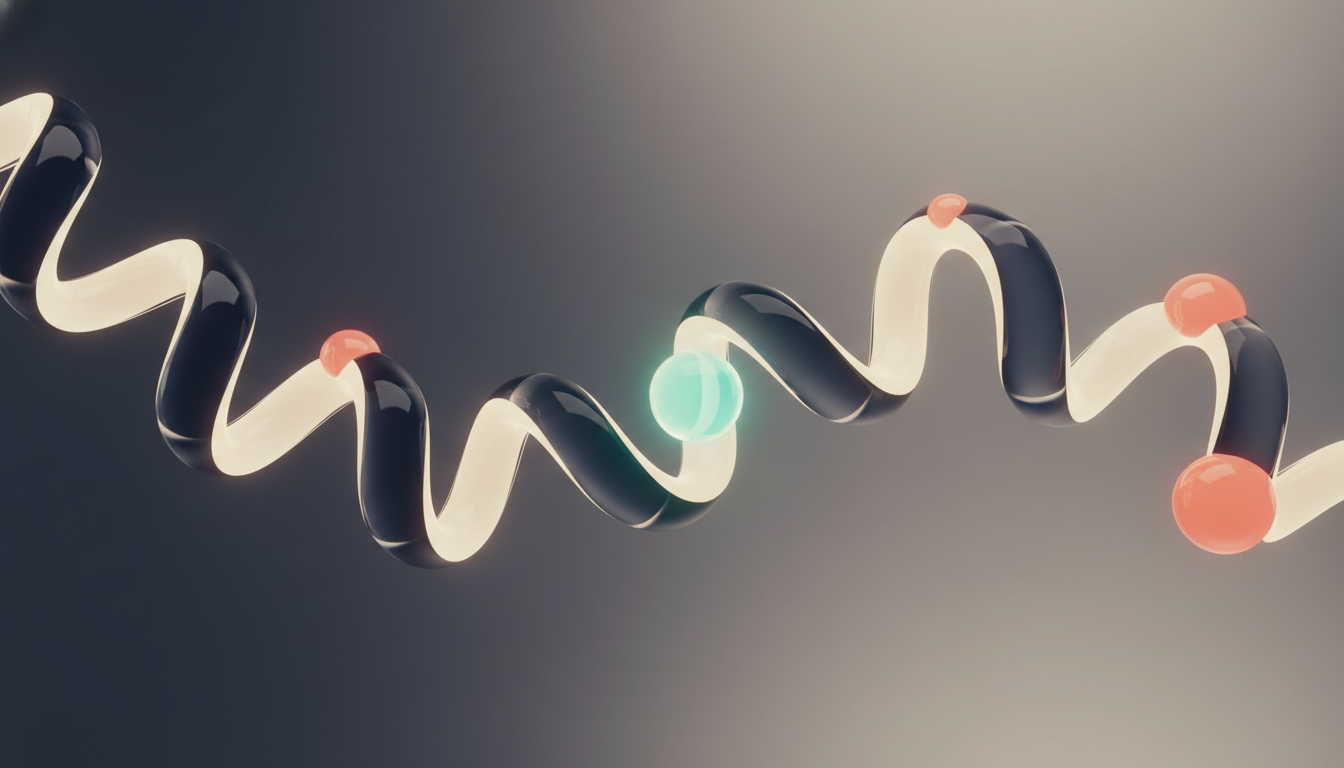
Sermorelin is GHRH(1-29) — the first 29 amino acids of the 44-amino-acid natural sequence. Research established that this truncated fragment retains the ability to bind the GHRH receptor and stimulate GH release, making it the shortest fully active analog of GHRH with clinical utility (Thorner et al., Journal of Clinical Investigation, 1983).
How it works
Sermorelin binds the GHRH receptor on pituitary somatotrophs. The receptor triggers a cascade — adenylyl cyclase activation, cAMP production, and ultimately GH secretion in a pulse. Crucially, the pituitary’s own feedback mechanisms remain intact: somatostatin, the natural GH-inhibiting hormone, can still blunt the response. This means GH release via sermorelin follows a more physiologic pattern than direct GH injection, which bypasses the pituitary entirely and suppresses the natural feedback loop over time.
Sermorelin was available as Geref (Serono) — a branded pharmaceutical approved for pediatric GH deficiency. Serono discontinued the branded product in 2008 due to commercial reasons, not safety findings. The active ingredient did not change regulatory status; it continues to be used as a compounded active pharmaceutical ingredient in 503A preparations.
Who asks about it
Sermorelin is one of the most commonly researched peptides in men’s health and longevity medicine contexts. People typically encounter it when investigating options for age-related GH decline — a well-documented phenomenon published in the peer-reviewed literature as somatotropic axis aging. Clinicians in functional medicine frequently use sermorelin as a first-line GHRH analog given its decades-long history and characterization.
What the research says
GH secretion declines measurably with age — published research has documented an approximate 14% decline per decade of adult life (Iranmanesh et al., Journal of Clinical Endocrinology & Metabolism, 1991). Sermorelin’s mechanism is studied in this context: by stimulating the pituitary rather than introducing exogenous GH, it works within the body’s existing axis.
A randomized trial published in the Journal of Clinical Endocrinology & Metabolism (Corpas et al., 1993) examined GHRH(1-29) administration in older men, documenting increased IGF-1 levels and GH pulse amplitude in the treated group compared to controls (Corpas et al., JCEM, 1993).
What to know before considering it
Sermorelin requires a valid prescription following a clinician evaluation that includes baseline IGF-1 levels and a review of your health history. It is generally well-tolerated in physician-supervised protocols; individual response varies. Common reported effects in the literature include injection-site flushing and transient headache at initiation. Contraindications include active malignancy (as with any GH-axis stimulus), and evaluation for this is part of a responsible clinical assessment.
The Halftime POV
Sermorelin occupies an interesting position in peptide medicine: it has more clinical history than most compounded peptides, a well-understood mechanism, and a pharmacokinetic profile that aligns with physiologic pulsatile GH secretion. For someone interested in supporting the GH axis as part of a broader longevity-focused protocol, it is the compound with the most published human data. That does not make it right for everyone — but it makes the conversation with a clinician a well-grounded one.
Related reading:
FAQ
Q: What is sermorelin? A: Sermorelin is a synthetic analog of growth-hormone-releasing hormone (GHRH) comprising the first 29 amino acids of the natural 44-amino-acid sequence. It binds GHRH receptors on pituitary somatotroph cells, stimulating natural pulsatile GH release without introducing exogenous growth hormone directly.
Q: How is sermorelin different from direct GH injection? A: Sermorelin works upstream — it stimulates the pituitary to release its own GH through the natural feedback loop. Direct GH injection bypasses the pituitary and suppresses the natural feedback system over time. With sermorelin, somatostatin (the natural GH inhibitor) can still blunt the response, maintaining a more physiologic pattern.
Q: Is sermorelin FDA-approved? A: Sermorelin was once available as a branded pharmaceutical (Geref, Serono) approved for pediatric GH deficiency. Serono discontinued the branded product in 2008 for commercial reasons — not safety findings. The active ingredient continues to be used as a compounded ingredient in 503A preparations, which are not themselves FDA-approved.
Disclaimer
This article is educational and is not medical advice. Compounded medications are not FDA-approved. Clinical outcomes depend on individual factors and require physician evaluation. Results vary. Halftime Health is launching soon — join the waitlist to get updates.
Get updates
Halftime Health is launching soon. We’ll share what we learn along the way — the research, the regulations, the real-world trade-offs. Join the waitlist and we’ll email you when we’re live.
Sources
- Thorner MO, et al. Extrahypothalamic growth-hormone-releasing factor (GRF) secreted by a pancreatic tumor. Journal of Clinical Investigation, 1983.
- Iranmanesh A, et al. Age and relative adiposity are specific negative determinants of the frequency and amplitude of GH secretory bursts and the half-life of endogenous GH. JCEM, 1991.
- Corpas E, et al. Human growth hormone and human aging. JCEM, 1993.
This article discusses compounds that are currently under FDA Category 2 review (see our FDA categorization explainer). These compounds are not currently part of Halftime Health’s published protocol catalog. This article is provided for educational purposes only and does not constitute medical advice or an offer to sell.
Sources & references
- academic.oup.com — https://academic.oup.com/jcem/article/73/5/1081/2652545
- academic.oup.com — https://academic.oup.com/jcem/article/76/6/1425/2653386
- academic.oup.com — https://academic.oup.com/jcem/article/73/5/1081/2652545
- academic.oup.com — https://academic.oup.com/jcem/article/76/6/1425/2653386