How sermorelin signals growth hormone release
Sermorelin doesn’t add growth hormone. It asks the pituitary to make more of its own.
TL;DR
- Sermorelin is a signaling peptide that copies the first 29 amino acids of GHRH (growth-hormone-releasing hormone).
- It binds to GHRH receptors on the pituitary gland and triggers a pulse of the body’s own growth hormone.
- The body’s natural off-switch still works, which is why sermorelin produces a release pattern that looks more like normal physiology than a direct growth-hormone injection does.
What it is
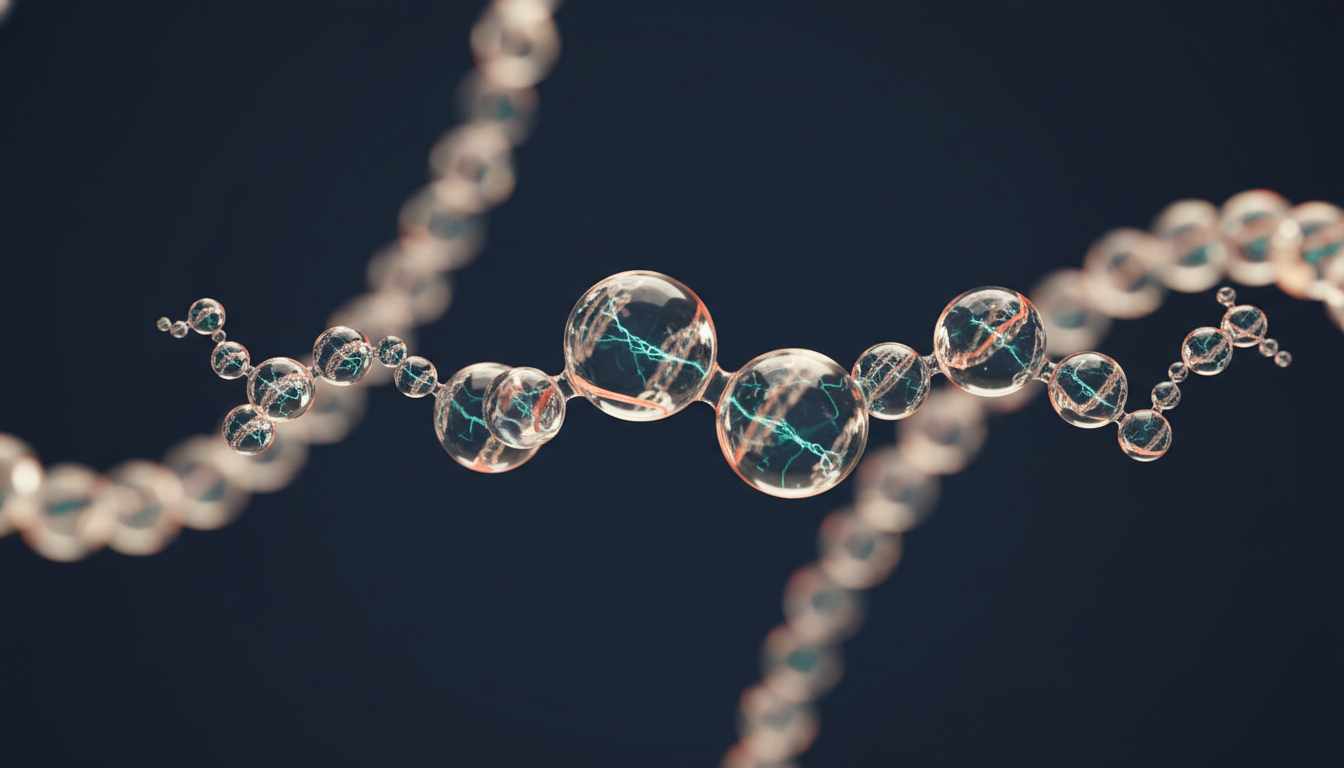
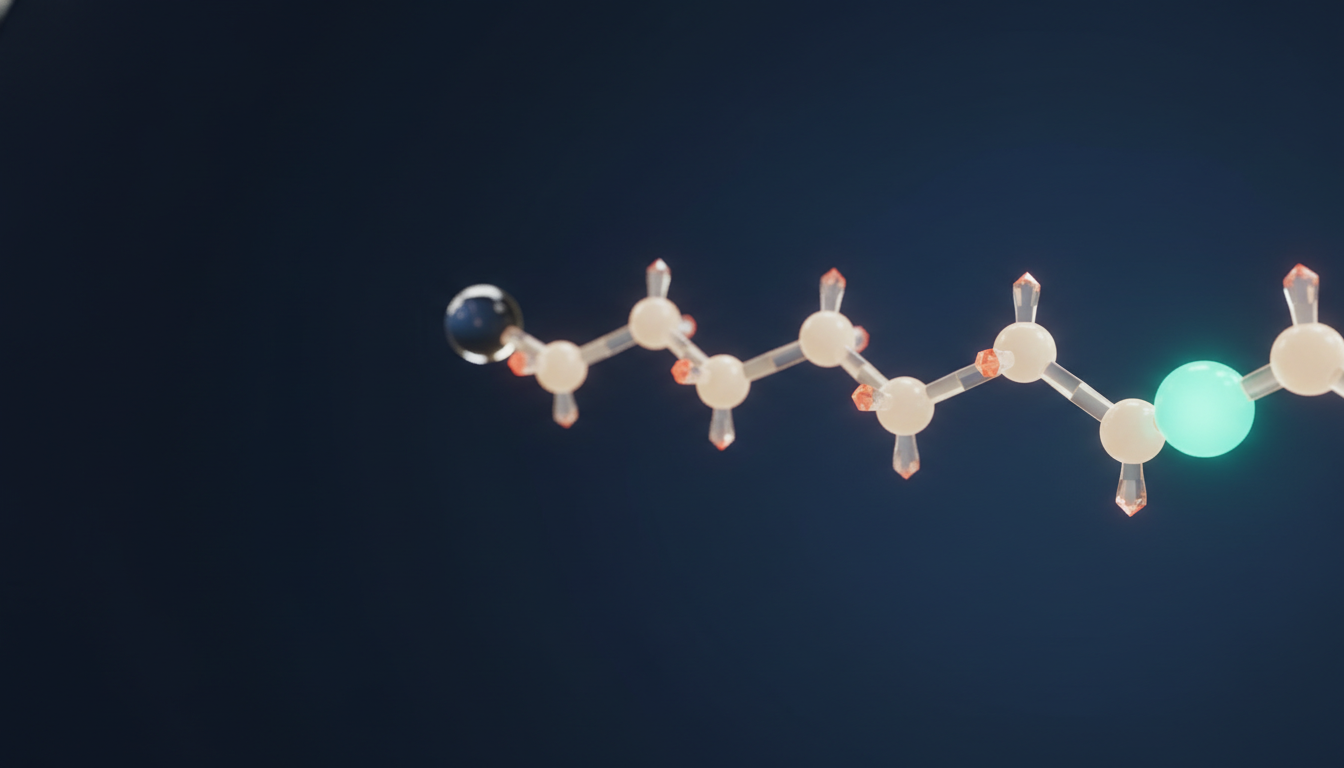
Sermorelin is a synthetic peptide built from the first 29 amino acids of GHRH (growth-hormone-releasing hormone — in plain English: the brain’s signal that tells the pituitary to release growth hormone). The body’s full GHRH molecule is 44 amino acids long, but the first 29 carry essentially all of the activity. Sermorelin is, in effect, the working tip of that natural signal — a key cut from a larger key.
How it works
Think of the pituitary gland as a small thermostat sitting under the brain. Sermorelin is the finger that taps the dial. When sermorelin reaches the pituitary, it binds to GHRH receptors on cells called somatotrophs. Those cells respond by releasing a pulse of the body’s own growth hormone into the bloodstream (Walker, Clinical Interventions in Aging, 2006).
Two natural brakes still apply. The first is somatostatin, the body’s “stop releasing” signal. The second is feedback from IGF-1 (insulin-like growth factor 1) — the molecule the liver makes after a growth hormone pulse. When IGF-1 climbs, the pituitary slows down. That feedback loop is what keeps the response physiological rather than runaway.
Who asks about it
People come to this question when they have heard sermorelin and HGH (human growth hormone) used as if they are the same thing. They are not. The mechanism difference matters for how a clinician chooses between them.
What the research says
The mechanism has been studied since the 1980s. The original work characterizing the active fragment of GHRH established that the 1–29 sequence retains full agonist activity at the GHRH receptor (Lance et al., Peptides, 1990). Modern reviews consistently describe sermorelin as a GHRH analog that produces pulsatile growth hormone release rather than the steady elevation seen with exogenous HGH.
What to know before considering it
Sermorelin is a prescription medication and any access requires a licensed clinician evaluation. The mechanism does not predict outcomes for any individual. Side-effect data, dosing context, and contraindications are covered in companion posts.
The Halftime POV
Mechanism is not a marketing claim — it is the lens that makes a clinician’s choice make sense. Sermorelin works through the body’s own machinery, not around it. That is the part of the story that gets lost when peptides are sold as shortcuts.
Related reading:
- Sermorelin explained: the GHRH analog
- CJC-1295 + Ipamorelin: why they are often combined
- What are peptides? A plain-English primer
FAQ
Q: How does sermorelin work? A: Sermorelin is a 29-amino-acid copy of the active part of GHRH (growth-hormone-releasing hormone). It binds to GHRH receptors on pituitary cells and asks the pituitary to release growth hormone. The body still controls the rhythm and the off-switch.
Q: Is sermorelin growth hormone? A: No. Sermorelin is a signaling peptide. It does not contain growth hormone. It tells the pituitary gland to make and release the body’s own growth hormone, which is why clinicians describe it as a secretagogue rather than a replacement.
Q: Why does sermorelin still work with the body’s natural feedback loop? A: Because sermorelin only nudges the GHRH receptor, the body’s normal brakes still apply. Somatostatin (the off-switch hormone) and high IGF-1 levels both blunt the response. That feedback loop is one reason clinicians choose secretagogues over direct growth hormone.
Disclaimer
This article is educational and is not medical advice. Compounded medications are not FDA-approved. Clinical outcomes depend on individual factors and require physician evaluation. Results vary. Halftime Health is launching soon — join the waitlist to get updates.
Get updates
Halftime Health is launching soon. We’ll share what we learn along the way — the research, the regulations, the real-world trade-offs. Join the waitlist and we’ll email you when we’re live.
Sources
- Lance VA, et al. Super-active analogs of growth hormone-releasing factor (1-29)-amide. Peptides, 1990.
- Walker RF. Sermorelin: A better approach to management of adult-onset growth hormone insufficiency? Clinical Interventions in Aging, 2006.
This article discusses compounds that are currently under FDA Category 2 review (see our FDA categorization explainer). These compounds are not currently part of Halftime Health’s published protocol catalog. This article is provided for educational purposes only and does not constitute medical advice or an offer to sell.
Sources & references
- pubmed.ncbi.nlm.nih.gov — https://pubmed.ncbi.nlm.nih.gov/2406196/
- ncbi.nlm.nih.gov — https://www.ncbi.nlm.nih.gov/books/NBK279070/